


When we tackle car maintenance in Arctic conditions, we should focus on battery health, antifreeze levels, and fluid checks. Regularly clean battery terminals to prevent corrosion, and consider using a battery blanket for warmth. We need to ascertain antifreeze is mixed properly, and all fluids are at appropriate levels to avoid failures. Plus, let’s keep an eye on our car’s exterior to combat rust. Staying on top of these tasks will keep our rides reliable. Curious for more tips?
Key Takeaways
- Use a temperature-compensated charger to ensure optimal battery voltage, crucial in extreme cold conditions.
- Maintain tire pressure regularly, as it drops significantly with lower temperatures, affecting traction and safety.
- Regularly inspect and clean battery terminals to prevent corrosion, ensuring reliable starts in freezing temperatures.
- Choose synthetic oils with lower viscosity ratings for better cold weather performance and fluidity in Arctic conditions.
- Wash vehicles frequently to remove salt and grime, preventing rust and corrosion caused by harsh winter elements.
Battery Voltage Requirements
When we’re in chilly Arctic conditions, keeping an eye on our battery voltage is super important. Our batteries can lose up to 50% of their capacity in extreme cold, so we need to stay vigilant with voltage measurement. A fully charged battery should read between 12.6 and 12.8 volts when the engine’s off.
If we see a reading below 12.4 volts, it might struggle to start our engine. Remember, battery discharge affects performance, especially when it’s frigid outside. Also, while the engine’s running, voltage can rise above 13.7 volts. Using a temperature-compensated charger can help maintain proper levels, preventing issues down the line. Being proactive keeps us rolling, even when the temperatures drop! Additionally, using cold weather zip ties can help secure any loose connections to prevent further electrical issues in extreme conditions.
Importance of Cleaning Battery Terminals

Since we’re dealing with the challenges of Arctic conditions, cleaning our battery terminals is essential for keeping our vehicles running smoothly. Corrosion can appear as white, green, or bluish crusty deposits, disrupting electrical flow and causing weak starts. It’s vital for corrosion prevention to use effective cleaning techniques regularly, especially in this climate. To clean our terminals, we should disconnect the negative first and then the positive. A wire brush or baking soda paste can help get rid of the buildup. After scrubbing, we’ll rinse and dry the terminals thoroughly. Finally, applying petroleum jelly or dielectric grease can protect against new corrosion forming. Additionally, maintaining clean connections helps improve our battery’s performance in these cold conditions, especially when dealing with heavy snowfall challenges. Let’s keep our connections clean to improve our battery’s performance in these cold conditions!
Benefits of Battery Blankets
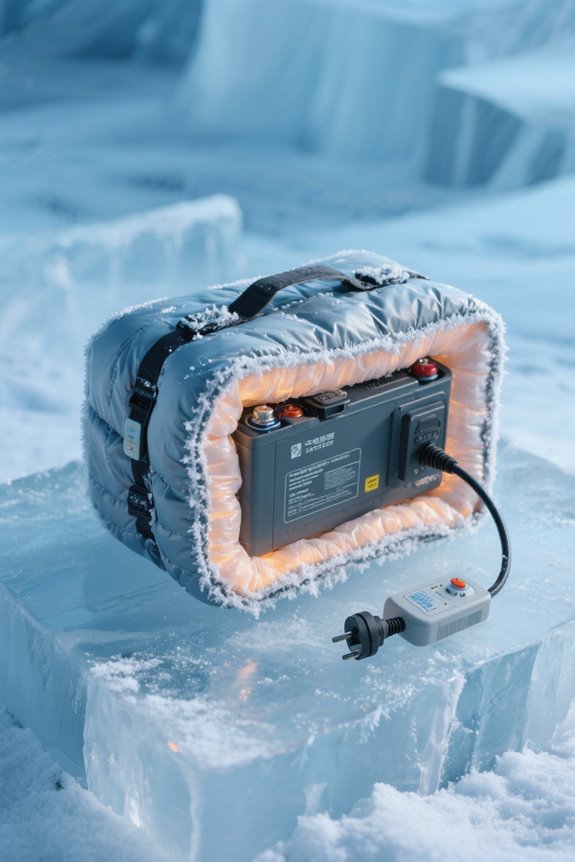
While we may not think about it often, a battery blanket can be a game-changer in Arctic conditions. These blankets come in various battery blanket options, including electrically powered models that actively heat your battery. They’re designed to help prevent battery fluid freezing, which means fewer headaches when it’s time to start your vehicle.
Using a battery blanket improves cold-weather starting reliability and reduces strain on the battery. Plus, they can extend your battery’s lifespan. Insulation effectiveness varies; while electric blankets deliver consistent warmth, simple insulating wraps are budget-friendly and require no power. By choosing the right blanket for your situation, we can guarantee our vehicles stay reliable, even when the temperature drops dramatically. Additionally, magnetic block heaters are also effective solutions for maintaining optimal engine temperatures during extreme cold weather.
Recognizing Battery Age Signs

Knowing how to spot signs of battery age can save us some hassle, especially in harsh Arctic conditions. We should pay attention to battery indicators like a slow engine crank, which often means our battery’s performance is fading. If we notice dim or flickering lights, it’s time to be concerned about battery output.
Frequent jump-starts can signal that our aging battery is struggling to hold a charge. We also need to watch for corrosion or swelling on the battery case; this is a clear sign it’s being worn down by the cold. Finally, don’t ignore those dashboard warning lights—they might be letting us know our battery needs some urgent care or replacement. Additionally, understanding cold cranking amps (CCA) can help us choose the right jump starter for our vehicle, ensuring reliable performance in extreme temperatures.
Ensuring Alternator Efficiency

To keep our vehicles running smoothly in Arctic conditions, we should pay attention to the alternator’s performance. With the cold cranking up demands on the electrical system, we might need alternator upgrades to guarantee cold performance.
First, let’s schedule regular maintenance checks to test output under load; this can prevent sudden failures. We should also inspect belts for wear and confirm they’re tight. A slipping belt can lower output.
Cleaning electrical connections is key too; it helps reduce voltage drops that strain our alternators. Additionally, we should consider high-output alternators, which can handle the extreme cold better. By being proactive, we can keep our cars dependable, even in the harshest conditions. Incorporating 12V smart battery chargers can enhance battery maintenance, ensuring optimal performance in frigid temperatures.
Evaluating Tire Tread Depth
Every vehicle owner should regularly check tire tread depth to guarantee safe driving in Arctic conditions. We all know that the right tread depth is essential for traction and safety on ice and snow. A simple tire inspection can save us from accidents; let’s keep our tires versatile.
To measure tread depth, we can use the penny test: if Lincoln’s head is visible, it’s time for new tires. For a more accurate reading, we recommend a tread depth gauge, measuring in the center and sides to spot uneven tread wear. Remember, maintaining 4/32″ or more is critical for safe winter driving. Keeping an eye on tread wear helps us stay safe and confident on those icy roads! Regular pressure checks are also vital for safe winter driving, as cold temperatures can significantly drop tire pressure.
Advantages of Winter Tires
When driving in Arctic conditions, we shouldn’t underestimate the impact of using winter tires. These tires provide significant traction benefits, especially when the temperature drops below 7°C (45°F). The flexible rubber stays soft, allowing better grip on icy roads.
Plus, their unique tread design channels snow and slush away, enhancing tire performance in challenging weather. With deep grooves and sipes, winter tires dig into snow and bite into ice, reducing slippage and improving stability. They also shorten stopping distances, which can prevent accidents. Additionally, using winter tire chains can further enhance traction and safety on heavily snow-covered roads.
Tire Pressure Management
Everyone knows that maintaining the right tire pressure is crucial, but it becomes even more important in Arctic conditions. With the temperature dropping, tire pressure often decreases by 1-2 PSI for every 10°C drop. That’s where tire pressure monitoring comes in handy.
We should check our tire pressure regularly, especially in the cold. A good rule is to do it at least biweekly. When temperatures plunge, adjusting pressure slightly above manufacturer recommendations can help compensate for those drops. And don’t solely rely on the TPMS warning light; manual checks provide peace of mind. Use a reliable pressure gauge in the morning when the tires are cold for the most accurate reading. Keeping on top of these cold weather adjustments guarantees safer driving in frigid conditions. Additionally, using a TPMS with solar charging can ensure continuous monitoring without the worry of battery failure.
Inspecting Tire Conditions
After managing tire pressure, it’s time to take a closer look at our tires. We need to inspect the tire tread for depth and condition. If we can see Lincoln’s head on a penny inserted upside down, tire replacement is necessary. Worn tread increases safety risks, especially in Arctic conditions where surface traction is essential for winter performance.
We should also check for any rubber degradation signs, like cracks or bulges. Uneven tread wear could indicate alignment problems. Regularly inspecting our tires helps prevent accidents; after all, we want to guarantee our vehicles can effectively handle snow and ice. Additionally, ensuring our vehicle’s wiper blades are in good condition is crucial for maintaining visibility during harsh winter weather. Once we’ve checked everything, we can feel confident hitting the icy roads together!
Selecting Proper Tire Inflation Levels
If we want to keep our tires safe and functional in Arctic conditions, selecting the right tire inflation levels is crucial. Tire pressure can drop about 1-2 PSI for every 10°C decrease in temperature. So, we need to check our tire pressure regularly, at least biweekly during the colder months.
Always inflate tires to the manufacturer’s recommended cold tire pressure, which you can find on the driver’s door jamb. For those long drives in the cold weather, consider slightly overinflating to compensate for pressure loss while driving. Remember, cold tires give the most accurate reading, so check them in the morning when they’ve been stationary. Keeping our tires properly inflated guarantees better traction and safety on icy roads, as proper tire maintenance can significantly enhance vehicle performance during harsh winter conditions.
Choosing the Right Oil for Winter
What oil should we pick for winter driving in Arctic conditions? For best engine protection, we should consider oils with a lower “W” viscosity rating, like 0W or 5W. These oils flow better in cold weather, helping our engines start smoothly in extreme temperatures. Synthetic oils are particularly beneficial, as they maintain fluidity and resist thickening, unlike conventional oils.
Always verify oil compatibility with our vehicle’s specifications to avoid issues. Dual-grade oils, like 5W-30, offer both cold-weather performance and high-temperature protection. Remember to check our oil levels frequently; cold can affect consumption. So, let’s make that switch before the first freeze to keep our engines running efficiently!
Antifreeze Level Maintenance
While it might seem like an easy task, maintaining the right antifreeze levels in Arctic conditions is essential for our engines. A proper antifreeze concentration, ideally a 50:50 mix with water, prevents our engine coolant from freezing. Too much water can lead to freezing, while too much antifreeze might impair heat transfer.
Regular coolant inspection helps us catch potential leaks or contamination before they become problems. We should check coolant levels when the engine is cold, ensuring they’re between the “min” and “max” lines. Let’s also keep an eye on the hoses and radiator for any cracks or leaks. A well-maintained cooling system reduces the risk of overheating, helping us avoid costly repairs later.
Fluid Level Checks for All Systems
Since we’re dealing with Arctic conditions, it’s essential that we don’t overlook fluid levels in all our vehicle systems. Regular fluid level monitoring is a must to keep our vehicles running smoothly. We should stick to our maintenance schedules, especially for engine oil and brake fluid.
During winter, oil can thicken and lead to engine troubles if old or at the wrong viscosity. Checking transmission and differential fluids can prevent drivetrain failures too. And don’t forget about brake fluid — low levels might signal leaks that could compromise our safety.
Let’s make it a habit to check each fluid regularly, and if needed, top them up using the specified products to keep everything in tip-top shape!
Exterior Care and Rust Prevention
To keep our vehicles in great shape during Arctic winters, we need to pay special attention to exterior care and rust prevention. Regular washing is essential. Let’s wash our cars frequently to remove salt and grime that can lead to rust. Don’t forget to clean the undercarriage and wheel wells, as salt tends to hide there.
Applying a high-quality wax before winter creates a protective barrier against moisture and road salts. Consider rust-proofing treatments, especially on undercarriages, which guard against that sneaky corrosion. Finally, we should repair any paint chips immediately, as they expose bare metal and can lead to rust spots. If we can park indoors or use car covers, it’ll really help protect our vehicles and extend their lifespan.
Preparing for Winter Driving Conditions
Every driver knows that preparing for winter driving conditions is essential. We need to start with our vehicle systems, like testing the battery and checking tire pressure regularly. Cold temperatures can affect not just our starting power but also our traction.
Let’s keep a close eye on our antifreeze levels—making sure to have a 50/50 mix to prevent freezing. Don’t forget those winter-grade windshield wipers and fluids!
Now, it’s also wise to pack emergency supplies like blankets, water, and a shovel. If we respect the road and drive cautiously, maintaining longer following distances, we’re less likely to run into trouble. Ultimately, a little preparation can go a long way in ensuring safety this winter.
Frequently Asked Questions
How Often Should I Replace Wiper Blades in Arctic Conditions?
We should replace our wiper blades every 6 months in Arctic conditions for ideal performance. By prioritizing wiper maintenance, we guarantee safety and clear visibility during harsh weather. Let’s make this a regular part of our winter prep routine!
What Items Should Be Included in a Winter Emergency Kit?
Like a warm hug on a frigid day, our winter emergency kit should include first aid supplies, tire chains, non-perishable snacks, water, warm clothing, and a flashlight to guarantee we’re ready for anything together.
How Do Road Salt and Grime Affect Vehicle Paint?
Road salt and grime can seriously damage our vehicle’s paint. To protect it, we should prioritize paint protection methods and consider winter detailing to keep our cars looking great and safe from corrosion.
Are There Any Specific Products for Rust-Proofing in Extreme Cold?
Like a warm blanket against winter’s chill, certified rust inhibitors, such as Nox-Rust and Krown, protect vehicles in extreme cold. We’ve found these products truly make a difference for our community’s vehicles.
What Should I Do if My Car Gets Stuck in Snow?
If we find ourselves with a stuck vehicle in snow, let’s begin snow removal around the tires, use traction aids, and gently rock back and forth to help get moving again. Safety’s our priority!


