


When packing for winter, we should start by selecting sturdy, water-resistant storage containers. Clear bins help us find things quickly. Next, let’s prioritize warmth with thermal layers and blankets. Remember to include a portable emergency kit with essentials like jumper cables and a flashlight. It’s vital we keep weight distribution in mind, placing heavier items on the bottom for stability. There’s a lot more we can do to prepare for winter travel ahead!
Key Takeaways
- Use stackable, water-resistant containers with tight-fitting lids to organize and protect items from moisture and pests.
- Apply layering strategies by packing multiple thin clothing layers for warmth, ensuring proper fit to maintain circulation.
- Distribute weight evenly, placing heavier items at the bottom to stabilize the load and prevent shifting during travel.
- Keep high-priority items, like first aid kits and essential tools, easily accessible for quick retrieval during emergencies.
- Regularly review and update your winter car bundle to replace expired items and adapt to changing weather conditions.
Assessing Your Packing Needs
When it comes to packing your car for winter storage, we should consider a few key areas to guarantee everything’s in order. First up is vehicle preparation. Let’s clean both the inside and out to avoid dirt and moisture causing damage. Checking fluids like oil and coolant is vital too; we want to keep everything at proper levels for winter readiness.
Next, we need to assess our battery’s health. If it’s been a while, a trickle charger might be our best friend, especially one like the Battery Tender Junior which is designed for motorcycle and ATV battery maintenance. Don’t forget the tires—maintaining the right pressure stops flat spots from ruining our wheels. Finally, a cover over the interior can save us from pests that see our car as an inviting home!
Selecting the Right Storage Containers
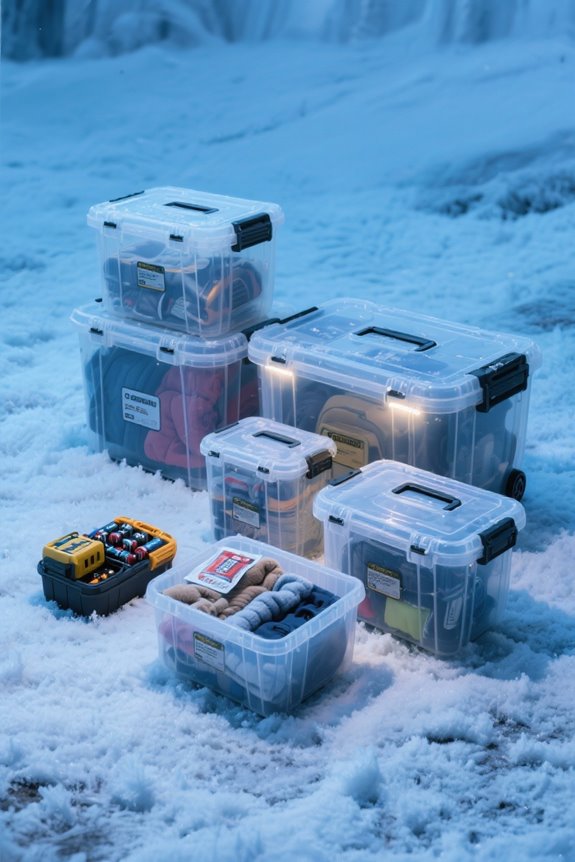
Once we’ve prepared our vehicle for winter, it’s time to think about how we’ll store our gear. We should opt for plastic storage containers because they’re water-resistant and easy to clean. Look for high-density polyethylene (HDPE) or polypropylene materials for superior handling durability. Containers with tight-fitting lids prevent moisture and pests from getting in.
Choosing transparent or semi-transparent containers makes finding our gear a breeze without having to open each one. Let’s also consider stackable designs that fit securely in our vehicle, ensuring we can access essentials like blankets and tools without a hassle. With these tips, we’ll keep our winter gear organized, secure, and ready for any adventure! Additionally, using trunk organizers can help maintain a tidy vehicle space while we’re on the go.
Organizing Emergency Tools Efficiently
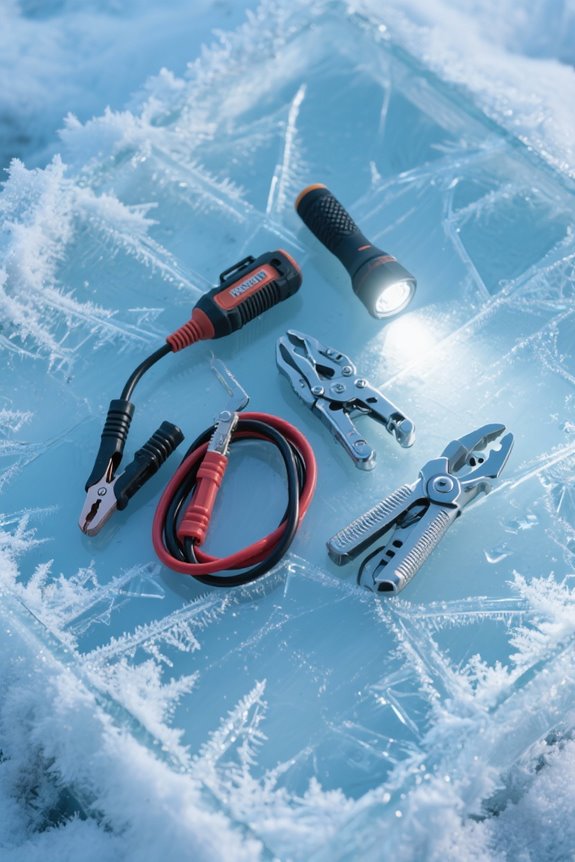
To guarantee we’re prepared for any winter mishap, we need a smart way to organize our emergency tools. Using effective tool categorization strategies, we can group items by function. For example, we can keep our mechanical tools in one bin and survival gear in another.
Employ compact arrangement techniques, like using sturdy bins that fit neatly in our car’s storage spaces. It’s best to label containers, making it easy to find what we need quickly. We should also store high-priority items, like first aid kits, at the top for immediate access. By keeping everything sorted and compact, we’ll save time and reduce stress when winter troubles arise. Additionally, having a reliable ice scraper, such as the Snow Joe Edge SJEG01, ensures that we are equipped to handle frost and ice efficiently.
Prioritizing Warmth and Safety Items
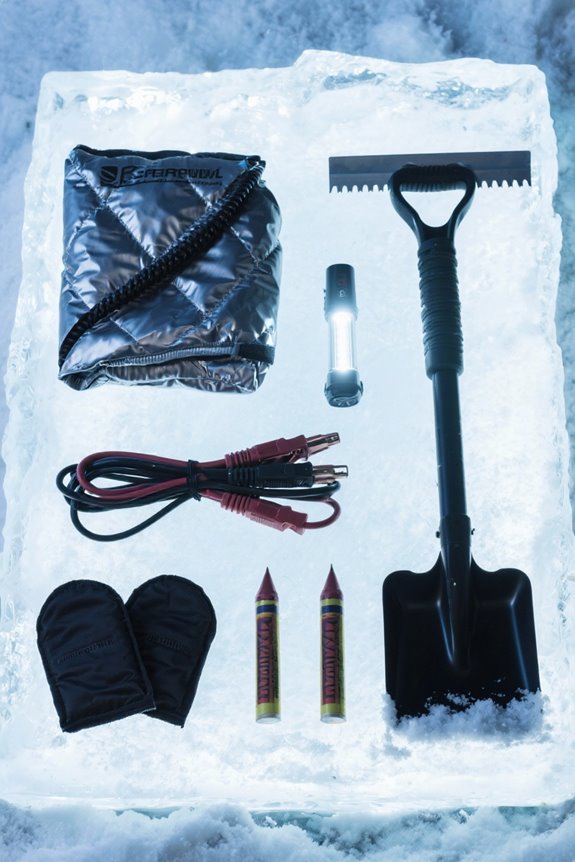
Staying warm and safe during a winter emergency is essential, so let’s prioritize what we pack in our car. First, we should include thermal clothing—think layered outfits like thermal base layers, insulated layers, and waterproof outer shells. Don’t forget extra gloves, hats, and socks to keep us cozy and frostbite-free.
We also need to think about warmth retention by packing durable blankets or sleeping bags rated for subzero temps. Consider including a fleece heated car blanket to provide adjustable warmth during emergencies. A few hand warmers and thermal emergency blankets can really make a difference. Finally, let’s not overlook a first aid kit, necessary medicines, and a water supply. Keeping these items in mind gives us the best chance of staying warm and safe during those chilly winter adventures!
Packing for Traction and Stability
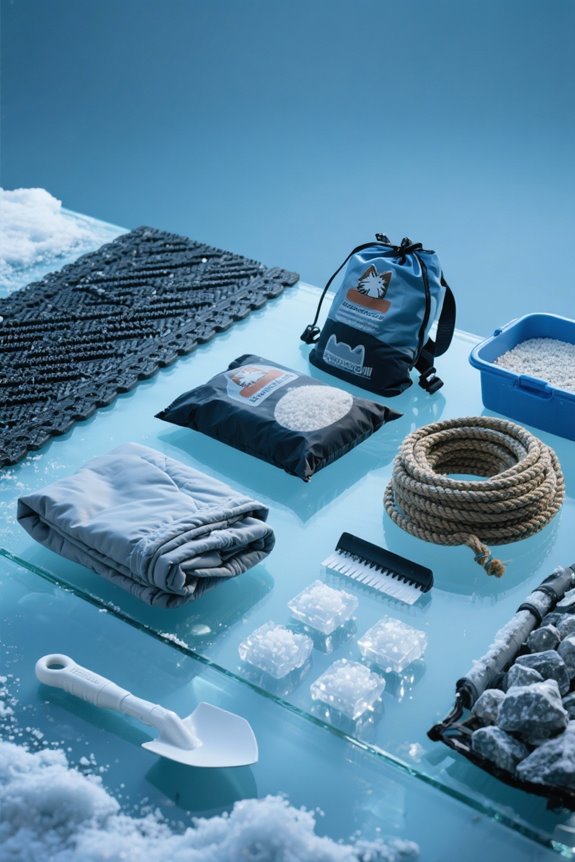
While winter driving can feel challenging, preparing your vehicle for better traction and stability isn’t as hard as it sounds. We can start by packing essential traction aids like sand or kitty litter for extra grip on icy roads. Tire chains are also crucial—make sure they’re suited for your vehicle.
For vehicle balance, we should evenly distribute weight and keep heavy items low and centered. This helps maintain stability when the roads get slippery. Don’t forget to pack a small shovel, too. It’ll come in handy for clearing snow and creating a traction path around stuck tires. By organizing these items together, we’ll guarantee quick access when we need it most, making winter driving less challenging! Additionally, consider including biodegradable salt removers in your winter kit to protect your vehicle from salt damage while maintaining its appearance.
Storing Food and Hydration Supplies
With our focus on making winter driving safer, we can’t forget about food and hydration. Let’s stock up on shelf-stable snacks that won’t go bad, like energy bars, nuts, and freeze-dried options. These help us stay energized and alert when temperatures drop. For hydration management, it’s wise to carry water containers that resist freezing. Consider insulated bottles for hot drinks, which can warm us up and boost morale.
Don’t forget portioned packets of oatmeal or soup mixes—easy to prepare and perfect for cold days. Plus, a few sweetener packets can give us a quick energy boost. Let’s keep our food packed in waterproof containers to protect them from moisture and make everything easier to access! Additionally, having activated carbon filters in your car can help eliminate odors that may develop over time.
Ensuring Vehicle Maintenance Readiness
Before we hit the road this winter, confirming our vehicle is ready for the cold is fundamental. We all know that battery maintenance is important; cold weather can cut battery capacity by half, so let’s check those terminals for corrosion.
Next up, tire preparation is key. We should verify our tread depth is at least 2/32” and check tire pressure regularly since it drops with the temperature. Regular pressure checks are crucial for safe winter driving to ensure our tires perform well in icy conditions.
Fluid checks are a must. Let’s top off our coolant and switch to a freeze-resistant windshield washer fluid. Don’t forget wiper maintenance—if they’re streaking, it’s time for a replacement. Finally, brake inspections are crucial; good brakes mean safer driving on slippery roads. Let’s do this!
Incorporating Signaling and Communication Essentials
Having the right signaling and communication gear can make a big difference in a winter emergency. We should pack emergency signaling devices like flares and reflective triangles to boost our visibility when stranded. Flashlights with long battery life are essential for nighttime signaling, while whistles give us an audible way to attract attention in remote areas.
Don’t forget about communication tools! A portable, crank-powered radio keeps us updated on the weather and emergency broadcasts. Additionally, we must carry extra chargers for our phones, ensuring we can call for help when needed. By being prepared with these items, we not only enhance our safety but also the chances of keeping our group connected. Let’s be smart about our winter travel!
Layering Clothing and Insulation
To stay warm during winter adventures, we need to master the art of layering clothing. Start with a snug-fitting base layer made of materials like merino wool or synthetic fabrics, perfect for moisture management. Avoid cotton, since it retains dampness and can chill us.
Next, we add an insulating layer that traps body heat, using insulation materials like fleece or down. Remember, down works best when dry!
For effective cold protection, our layering strategies should include multiple thin layers. This way, we can easily adjust based on activity levels, avoiding overheating. Finally, make sure all layers fit well to guarantee circulation and warmth. With proper layering, we’re ready for whatever winter throws our way! Additionally, consider packing a comprehensive first aid kit to address any minor injuries that may occur during outdoor activities.
Packing a Portable Emergency Kit
Layering our clothing is just the first step to staying warm and safe in winter. Let’s get our portable emergency kit ready! We should include jumper cables to give our battery a boost when it fails in the cold. A flashlight with extra batteries is essential for those dark roadside moments, and it doesn’t hurt to have a whistle to signal for help.
For health, let’s pack a first aid kit with basic supplies. Hydration is important too; consider water purification methods like portable filters or waterproof matches to melt snow. Non-perishable snacks, warm blankets, and an extra change of clothes will keep our spirits up. With this kit prepped, we’re ready for whatever winter throws our way! Additionally, having a rear windshield cover can help protect your vehicle from snow and ice buildup while parked.
Keeping Weight Distribution in Mind
When we pack for winter travels, balance is key to a stable and safe car bundle. We need to focus on load balance by placing heavier items at the bottom, like jumper cables or a small shovel. This lowers our center of gravity, enhancing gravity management.
To prevent any shifts while we’re driving, let’s pack items symmetrically. That way, we’ll avoid an uneven weight distribution that can cause swaying. Additionally, using flexible bins makes it easy to rearrange items as needed, ensuring our bundle stays balanced.
Lastly, don’t forget to regularly check our setup, because even the best bundles can shift a bit. Keeping these tips in mind, we’re sure to travel safely! Adding compact and portable options like snow shovels to our winter gear can further enhance our preparedness for unexpected weather conditions.
Regularly Reviewing and Updating Your Bundle
Keeping our winter car bundle balanced is just the beginning; regular reviews are equally important. We suggest a review frequency of every season. This way, we can check for expired or used items, like batteries and granola bars, and replace them.
As weather conditions change, our bundle adjustments may include adding extra warm clothing or traction aids. Let’s also make certain our tools, like tire repair kits and flashlights, are functional and ready.
Don’t forget to audit our first-aid kits and refresh our bottled water every six months. A quick checklist can help us keep everything organized. By doing this, we’re not just prepared—we’re truly ready for whatever winter throws our way!
Frequently Asked Questions
How Can I Minimize the Weight of My Winter Car Bundle?
To minimize our winter car bundle’s weight, we should choose multifunctional gear, lightweight materials, and compact versions of essentials. Focusing on careful weight reduction guarantees we’re ready without excess baggage on our adventures together.
What Items Are Essential for Long Road Trips in Winter?
Did you know that nearly 50% of winter road trips experience unexpected delays? We should pack warm winter clothing, a variety of road trip snacks, and essentials to guarantee we stay safe and comfortable together on our adventures.
Are There Specific Brands Recommended for Winter Emergency Tools?
Yes, we’ve found that brands like AAA and Uncharted Supply Co. offer reliable winter emergency tools. For brand comparisons, consider features and prices when making our tool recommendations to guarantee safety during those cold drives together.
Is It Necessary to Have a First Aid Kit in My Car?
Absolutely, we believe having a first aid kit in our car is essential for car safety. It prepares us for unexpected injuries and guarantees we’re ready to help ourselves or others during emergencies.
How Often Should I Check My Emergency Supplies?
We should check our emergency supplies regularly—ideally before winter. Don’t worry about it being a chore; involving everyone makes it easier and guarantees we’re all prepared as a family for whatever may come our way.


