


No, power banks can’t start cars in winter. They just don’t have the power to give that big burst of energy needed for engine starts, especially when it’s cold. Car batteries struggle at low temperatures, and power banks can’t keep up. They’re better for charging phones or tablets. For winter emergencies, we should stick with jump starters, since they’re designed for car use. Want to know how to jump-start a car in the cold?
Key Takeaways
- Power banks cannot jump-start cars, as they lack the necessary power output required for engine starts.
- Cold weather significantly reduces a power bank’s performance and ability to hold a charge.
- Increased power demands in winter make power banks less effective for automotive use.
- Jump starters, not power banks, are designed to provide the high burst of energy needed for starting vehicles.
- Keeping power banks warm is crucial, but they still cannot replace the capability of jump starters in winter conditions.
Understanding Battery Challenges in Cold Weather
When temperatures drop, our car batteries can face some serious challenges. The cold affects battery performance by slowing down chemical reactions, which means they generate less energy. At around 0°F, our batteries might only deliver about 40% of their usual power.
In addition, colder weather makes electrolyte viscosity thicker, slowing ion movement and causing engine struggles when starting our vehicles. We also need to take into account increased power demand. With heaters and defrosters working harder, our batteries face additional stress.
These combined factors lead to more starting difficulties and performance drops. We should be aware of these challenges, especially in winter, to maintain our battery’s health and help avoid those frustrating morning starts. Additionally, using a charger with smart technology features can optimize battery performance during cold weather.
The Role of Jump Starters in Winter Car Starting

Even if we’ve taken precautions for winter, a dead battery can still ruin our day. That’s where jump starters come in, providing essential jump starter benefits when cold weather hits. Imagine being able to start our vehicle without needing another car. That’s independence!
Choosing a jump starter made for cold weather performance helps us avoid stranding ourselves during harsh conditions. Many models include nifty features like USB ports and LED lights, making them truly multifunctional. And let’s not forget those that include pre-heat technology, giving us a quick boost when temperatures plummet. Additionally, selecting jump starters with peak power output tailored for winter ensures they can handle the demands of cold engine starts.
Storing our jump starter at a charge above 80% and keeping it warm before use can enhance its effectiveness. Let’s be prepared to tackle winter together!
Power Banks vs. Jump Starters: Key Differences
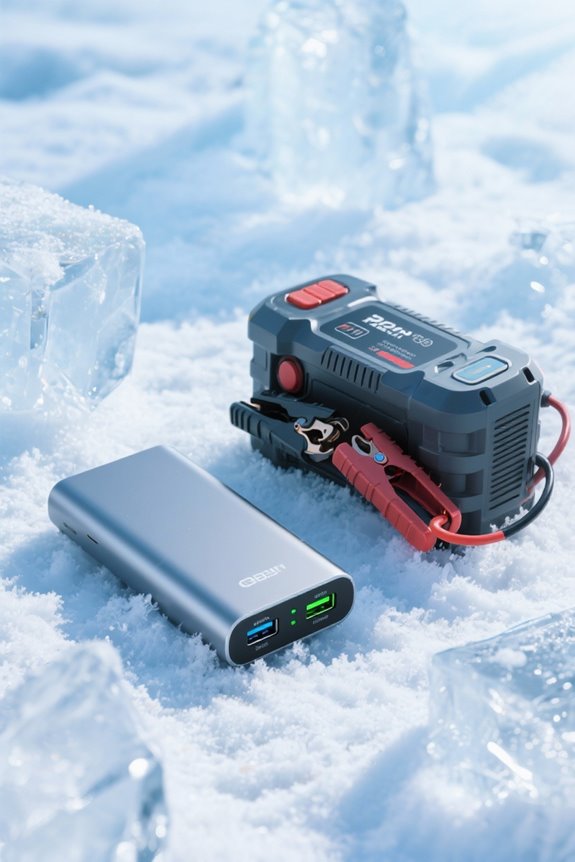
While we often think of power banks and jump starters as interchangeable, they serve very different purposes. Power banks are designed primarily for charging our phones and tablets, but they can’t handle the heavy lifting needed to jump-start a car. That’s where jump starters shine, delivering a powerful burst of energy to bring our vehicles back to life.
Let’s talk about power bank limitations: they require an outlet to recharge and lack the strength for starting engines. In contrast, jump starter advantages include portability, fast charging, and built-in safety features like short-circuit protection. Additionally, many jump starters boast multiple protection mechanisms to ensure safe operation during use. So, the next time we’re in a jam, let’s remember that jump starters are our go-to for car emergencies, while power banks are best suited for smaller devices.
Best Practices for Cold Weather Jump Starting
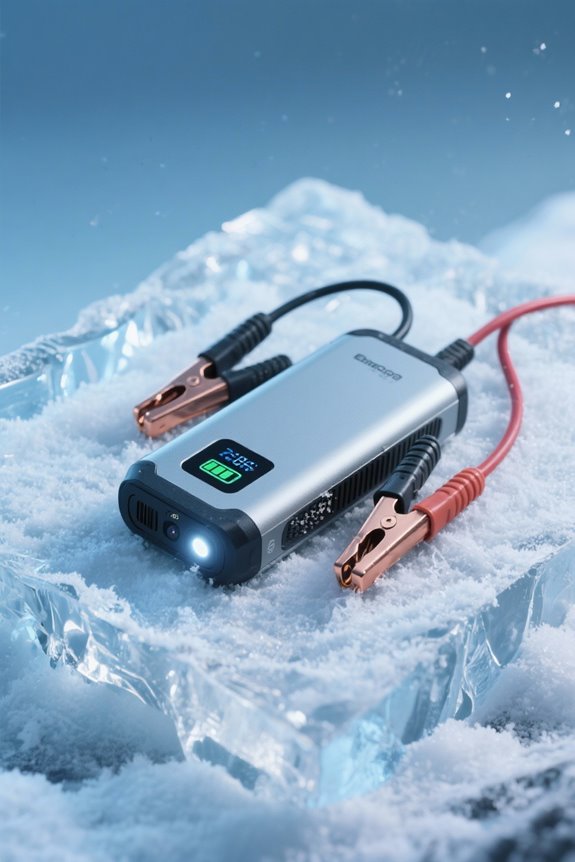
As temperatures drop, we should be extra careful when attempting to jump-start a car. First, park the working vehicle and the dead vehicle close, but don’t let them touch. Always turn off both engines before connecting jumper cables. Use insulated jumper cables that can handle the cold.
When connecting, remember to attach the red clamp to the dead battery’s positive terminal first. Then, ground the black clamp on an unpainted metal part, not the dead battery itself.
Once you start the working vehicle, let it run for a few minutes. Additionally, consider using a lithium battery warming pad to help maintain battery performance in cold conditions. Finally, after jump-starting, drive the revived car to recharge its battery—this is essential for proper battery maintenance in wintry conditions!
Limitations of Power Banks for Winter Use

Jump-starting a car in winter isn’t always smooth sailing, and power banks can face their own set of challenges when the temperatures plummet. For starters, cold weather hugely impacts power bank performance. When temperatures drop, their capacity to deliver power can decrease, much like your car’s battery. If we store these devices in frigid conditions, they struggle to hold a charge or deliver enough current, which is essential for winter reliability.
Additionally, our cars demand more from batteries in winter due to thick oil and electrical accessories. This means our power banks must work harder than usual. So, before relying on a power bank in winter, let’s confirm it’s kept warm and meets the cranking amps needed for those chilly starts. It’s important to understand that higher peak current is essential for effective operation in extreme cold.
Frequently Asked Questions
Can I Use My Power Bank to Charge a Car Battery?
Sure, we might wish our power bank could charge a car battery, but it’s not designed for that. Instead, let’s make certain our batteries are charged properly, embracing smarter alternatives for reliable battery performance.
What if My Power Bank Won’t Charge in Cold Weather?
If our power bank won’t charge in cold weather, we should remember that low temperatures affect performance. Let’s keep our banks warmed up and avoid charging them outdoors to maintain efficiency and longevity together.
Are There Power Banks Specifically Designed for Winter Use?
Yes, there are winter power banks specifically designed for cold weather. They’ve got features like higher CCA ratings and pre-heating technology, making them reliable companions for us during those frigid winter months.
How Can I Maintain My Jump Starter for Winter Readiness?
Our jump starter’s care is essential for winter maintenance; it’s like giving our vehicle superpowers! Let’s charge it regularly, store it properly, and inspect it frequently to guarantee it’s always ready when we need it.
Is It Safe to Use Multiple Power Banks for Starting a Car?
Using multiple power banks to start a car isn’t safe due to efficiency limitations and potential safety concerns. We should stick to specialized jump starters designed for this purpose to guarantee safe and reliable performance in winter.


