


When picking an ice scraper, let’s consider a few key points. First, think about the type—compact versions fit easily, while heated models are great for extreme ice. Next, check the material; plastic won’t scratch glass, but brass is tougher on ice. Size matters too; a 12-inch scraper works well for larger cars. Finally, look for ergonomic handles to reduce fatigue. Stick around, and you’ll discover even more tips for the perfect winter tool!
Key Takeaways
- Consider the thickness of ice; sharper blades are needed for hard, clear ice, while lighter models work for thin frost.
- Choose the material: plastic for safety, brass for harsh conditions, or a composite for a balance of both effectiveness and comfort.
- Select the appropriate size; 6–10 inch scrapers are best for compact vehicles, while 12–30 inch scrapers suit larger cars.
- Look for ergonomic designs with comfortable handles and features like cushioned grips to reduce fatigue during extended use.
- Additional features like telescoping handles and built-in squeegees can enhance efficiency and adaptability for various ice conditions.
Understanding Different Types of Ice Scrapers
When space is tight, compact designs fit nicely in any glovebox. The wedge shape helps clear ice, too! Don’t forget a good handle grip; it makes scraping much more comfortable. Additionally, selecting an ice scraper with ergonomic designs can enhance comfort during extended use.
Material Considerations for Durability and Effectiveness

Selecting the right material for your ice scraper is essential for getting the job done effectively. When it comes to material durability, plastic scrapers are popular for everyday use, as they’re affordable and generally less likely to scratch glass. However, they can struggle with thick ice. Brass blades, on the other hand, have superior ice penetration, making them ideal for harsh winters, though they usually come at a higher price. For a balance, consider composite models that combine plastic handles with brass blades, offering comfort and effectiveness. Regardless of your choice, always think about how these materials impact scraper effectiveness. Ultimately, finding the right scraper can make those frosty mornings a lot easier! Additionally, look for scrapers with ergonomic handle designs to reduce strain during prolonged use in harsh conditions.
Choosing the Right Size and Handle Length

Picking the right size and handle length for your ice scraper makes a big difference in how well it works. For compact vehicles, a 6–10 inch scraper fits easily in glove boxes, making it super handy. However, if we drive larger cars or deal with thick ice, a standard 12–30 inch scraper may be better.
These scrapers often come with ergonomic handles designed for comfort, reducing fatigue while we work. Some even have extendable handles for extra reach. So, when we think about handle comfort and overall size, let’s choose a scraper that fits our needs and guarantees we can tackle winter weather with ease! Additionally, opting for a scraper with ergonomic designs can significantly enhance user experience and control during use.
Assessing Ice Conditions for Optimal Performance

Understanding ice conditions is essential for getting the best performance from our ice scrapers. The thickness of the ice plays a critical role in how we choose to tackle it. For instance, clear, hard ice requires our scrapers to have sharp, sturdy edges, while thinner frost can be handled with less aggressive tools.
Paying attention to surface conditions is equally important. If we’re dealing with heavy, crusted snow mixed with ice, a reinforced scraper will save us time and effort. Additionally, icy patches with road salt residue may need a rubber-edged scraper to prevent scratches. By evaluating ice thickness and surface conditions ahead of time, we can select the ideal scraper for each winter morning battle. Heated designs can also provide quicker melting for more efficient de-icing.
Evaluating Additional Features and Ergonomics
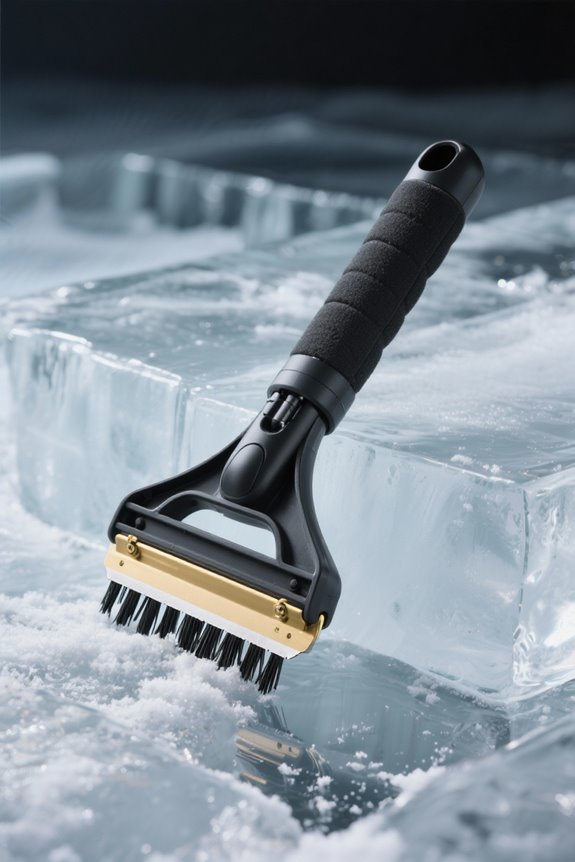
Once we’ve assessed the ice conditions, it’s time to evaluate how the ice scraper feels in our hands. Comfort is key! We should look for scrapers with foam-cushioned grips to minimize hand fatigue during those long scraping sessions. Telescoping handles provide flexibility, making it easier to reach all areas of our windshield.
Additionally, we should consider safety features, like scratch-resistant materials to protect glass surfaces and non-slip handles, perfect for gloved hands. Innovative designs, such as ice scrapers with built-in squeegees or multi-functional heads, can improve our scraping efficiency. By choosing the right tool, we can tackle winter with confidence and ease! A scraper with ergonomic handle design enhances comfort and reduces hand and wrist strain during use.
Frequently Asked Questions
Can I Use My Ice Scraper on Tinted Windows?
Sure, we can use ice scrapers on tinted windows, but let’s stick to safer scraper materials—like plastic or soft-edged options. This’ll help protect our tint while effectively removing that stubborn ice without damage.
How Do I Clean and Maintain My Ice Scraper?
We’d all love a miracle scraper that cleans itself, right? But let’s face it—regularly cleaning our essential plastic tools and checking them often guarantees they stay effective and ready for winter’s icy grip.
Are Heated Scrapers Safe for All Vehicle Types?
Heated scrapers aren’t universally safe for all vehicles due to varying compatibility. We should always check our vehicle’s specifications and prioritize heated scraper safety, ensuring it’s suitable for our specific car make and model.
What Is the Average Lifespan of an Ice Scraper?
We often find our ice scrapers last around one season, but with high-quality materials and smart designs, some can endure longer. Let’s care for them, ensuring we all stay warm and safe together this winter!
Do Ice Scrapers Work Better in Cold or Warm Weather?
Ice scrapers generally show better cold weather effectiveness, as they tackle thick ice. However, in warm weather, their performance shifts to quickly removing frost. We all need tools that adapt to whatever weather challenges we face together!


