


To prepare our car for coastal winter weather, we should start by monitoring tire pressure, adjusting it as needed since colder temperatures can lower it. Next, let’s check tire tread depth using the quarter test and consider replacing any worn tires. We also want to inspect visibility aids like wipers and headlights. Finally, a good engine tune-up and brake system check can keep us safe. There’s more we can do to tackle winter conditions together!
Key Takeaways
- Monitor tire pressure regularly, adjusting for temperature fluctuations to maintain optimal performance in coastal winter conditions.
- Ensure your battery is in good health, as cold weather can diminish its power; consider insulation for added protection.
- Use winter-grade windshield washer fluid to prevent freezing and ensure clear visibility during coastal storms.
- Check the engine’s fluid levels, particularly coolant and oil, to avoid freezing and ensure reliable performance in colder temperatures.
- Inspect and maintain your brake system for corrosion and proper fluid levels to ensure safety during wet and slippery conditions.
Monitor and Adjust Tire Pressure
As winter sets in, we need to pay extra attention to our tire pressure. Colder temperatures can drop our tire PSI by 1-2 pounds every 10°C. If it’s chilly outside, our tires might lose up to 10 PSI after a significant cold snap. Let’s remember to check tire pressure at least every two weeks to stay safe and keep fuel efficiency intact.
When it’s around 30°F, consider adding 3-4 PSI above the summer baseline to counteract pressure loss. Use a good quality tire gauge, since relying solely on the onboard TPMS isn’t enough! Checking our tire pressure regularly not only boosts winter safety but also extends our tire life. Additionally, regular pressure checks are crucial for safe winter driving. Let’s take these simple steps to get ready for the snowy roads ahead!
Inspect Tire Tread Depth

Once we’ve checked our tire pressure, it’s time to take a closer look at our tire tread depth. This step is essential for our winter performance. To guarantee safety, winter tires should have a minimum tread depth of 3/16 inch, which helps grip icy roads effectively.
We can use the quarter test: insert a quarter into the tread with Washington’s head down. If we see the whole head, it’s time to rethink our tires. A professional inspection can catch issues we might miss, like uneven wear or damage. Checking our tread depth regularly not only keeps us compliant with local laws but also helps avoid accidents, keeping us safe this winter. Additionally, tire compatibility and sizing play a crucial role in ensuring optimal performance of your winter tires. Let’s stay proactive!
Replace Worn Tires

Safety is key when driving in winter weather, and replacing worn tires is an essential step. We all want to stay safe while maneuvering those icy roads! When selecting winter tires, look for the Mud and Snow (M+S) symbol or snowflake emblem—these guarantee compliance and effectiveness. Winter tires feature deeper tread and softer rubber that performs better in low temperatures.
If we notice tread wear or cracks, it’s time for new tires. Ideally, we should make the switch before temperatures drop below 45°F. This is especially true for coastal areas, where conditions can change unexpectedly. By prioritizing proper tire selection now, we’ll enhance our grip, improve control, and reduce those pesky braking distances, making every journey safer. Additionally, keeping wiper blades in good condition is critical for maintaining visibility during winter storms.
Carry Tire Chains
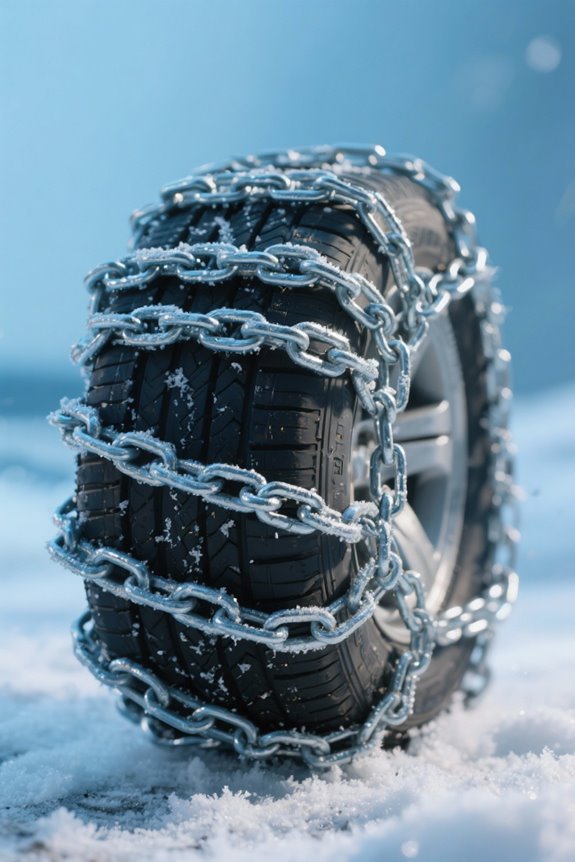
Winter roads can be tricky, and having tire chains ready is a smart move we should all consider. In states like California, tire chains are not just a suggestion—they’re often required when conditions get rough. We can choose from various tire chain types, including traditional link chains, which offer the best grip, or cable chains, which are easier to install.
When installing chains, let’s remember to find a safe, off-road spot to do it before hitting the icy roads. Each vehicle’s installation methods differ: front-wheel drive cars need chains on the front tires, while rear-wheel drive vehicles go on the back. Carrying tire chains is just good sense. Additionally, having compact and portable options like snow shovels in your vehicle can help you manage unexpected winter challenges. Let’s keep safe and be prepared!
Check Spare Tire Condition

A well-prepared spare tire can be a lifesaver when trouble strikes. We need to prioritize spare tire maintenance by checking its pressure regularly. Make certain it matches the manufacturer’s recommended PSI, as this guarantees reliability when we face emergencies. A digital tire gauge can help us get the most accurate readings. Regularly checking for professional accuracy ensures that your tire pressure is reliable and safe.
Next, let’s examine the tread depth using the penny test. If we can see the top of Lincoln’s head, it’s time for a replacement. Also, keep an eye on the tire’s age; spares older than six years should be replaced. By proactively examining the spare, we enhance our emergency preparedness, keeping us safe during those snowy coastal winter drives.
Ensure Battery Health
When we think about preparing our cars for winter, battery health often slips to the back of our minds. Cold temperatures can sap our batteries’ power, so we need to keep them in top shape. First, consider battery insulation. Using battery blankets can maintain warmth, improving performance when the temperature drops. They’re easy to install and a cost-effective way to protect our batteries.
Next, we should focus on charge maintenance. Regularly driving our vehicles helps recharge the battery, while portable chargers can be lifesavers for cars we use less often. Just a 30-minute drive can make a difference. Additionally, investing in a reliable 12V smart battery charger can ensure optimal battery performance during the winter months. By being proactive, we can guarantee our batteries last longer and perform better throughout the chilly season.
Clean Battery Terminals
Let’s plunge into the nitty-gritty of cleaning our battery terminals. First, we need to disconnect the negative terminal (the black one) before the positive (red). Safety first, folks! Next, we mix baking soda with water to create a paste – the perfect neutralizer for annoying battery corrosion.
We’ll then scrub the terminals and clamps with a stiff brush to banish that pesky buildup. After rinsing the terminals with water, let’s dry them thoroughly to avoid any new corrosion. Once they’re clean, we can add a thin layer of petroleum jelly for solid terminal protection against future corrosion. Additionally, using a battery maintainer can help keep our battery in top shape throughout the winter months. Finally, reconnect the positive terminal first. With just a bit of effort, we’ve guaranteed our battery stays healthy this winter!
Inspect Belts and Hoses
Three key components in your engine’s cooling and power systems are belts and hoses. We can’t stress enough how vital belt inspection and hose care are, especially during cold coastal winters. These rubber pieces can become brittle and less flexible, making them more prone to cracking. So, let’s check for visible cracks or frays.
Listen for high-pitched squeals when starting your car—that’s a sign of loose belts. For hoses, look for bulges and leaks. Squeeze them to test firmness; soft spots mean trouble. Remember to keep an eye on fluid levels to avoid stressing these parts. Regular inspections help prevent costly breakdowns and guarantee our rides stay safe during winter. Additionally, monitoring battery performance can enhance vehicle reliability in extreme cold. Let’s keep our engines happy!
Check Fluids and Levels
Fluids are the lifeblood of our vehicles, especially in winter. We need to verify our engine oil has winter-grade viscosity for ideal flow during those chilly starts. Synthetic oils are fantastic for this—they provide better lubrication and quicker starts when the temperature drops.
Coolant is equally crucial; we should check that the level is just right and the antifreeze mix protects against freezing. Don’t forget the brake fluid! Regular checks will help verify it’s clean and moisture-free for safe braking on icy roads.
Finally, let’s not overlook transmission fluid and washer fluid; winter-specific formulations are key. Keeping an eye on all these fluid types means better protection and performance when we need it most. Additionally, using products like gas line antifreeze can help prevent fuel lines from freezing, ensuring reliable starts in cold weather.
Test and Replace Lights
Winter driving can be tricky, and having properly functioning lights is essential for safety. Let’s kick things off with headlight testing. We should check if our headlights are working well, cleaning off any snow or ice that could block their brightness. If they’re old, consider replacing them with durable LED headlights for better visibility.
Next up is fog light replacement. Amber or yellow fog lights are fantastic for winter, cutting through rain and snow without causing glare. Remember to check the beam patterns too, as sharp cutoffs help reduce reflections in wet conditions. Making these simple updates not only enhances our safety but also keeps us within legal requirements. Additionally, ensuring your vehicle is equipped with winter wiper blades that can handle snow and ice will further improve visibility during harsh conditions. Let’s stay safe out there!
Maintain Visibility
While we might love the beauty of winter, it can really mess with our visibility on the road. To keep our view clear, let’s focus on windshield cleaning and defroster maintenance. We should clean both the inside and outside of all windows regularly, using a streak-free glass cleaner and a microfiber cloth to avoid glare and frost buildup.
Also, let’s verify our defrosters are working properly. If we notice frost forming, it’s time to check the defroster’s performance and airflow. We may also want to refill our windshield washer fluid with a winter-grade option to prevent freezing. Together, these steps will help us drive safely in winter’s tricky weather, keeping ourselves and others safe on the road.
Perform an Engine Tune-Up
To keep our engines running smoothly in winter, it’s essential we perform an engine tune-up. First, let’s tackle engine diagnostics. A quick check of our ignition system helps prevent those pesky misfires and guarantees we’re not left stranded on a chilly morning.
Next, we can do a spark plug inspection. Worn spark plugs can lead to poor engine performance and wasted fuel. Replacing them is a small effort for big benefits.
Lastly, adjusting our fuel system isn’t just nice; it’s necessary! Fine-tuning it can improve gas mileage and keep our engines humming.
Taking these simple steps guarantees our vehicles are winter-ready, from the cold morning starts to the snowy adventures ahead. Let’s stay proactive and enjoy safer drives!
Inspect Brake System
Checking our brake system is one of the most important steps we can take to guarantee safe driving in winter. We should start by checking the brake fluid; it must be at proper levels and free from contamination. A quick leak inspection of brake lines will help prevent any potential issues.
Next, let’s conduct a corrosion assessment. We need to inspect components like brake pads and calipers for rust or wear, as any damage can compromise braking performance. Finally, checking the brake rotors for excessive grooving is essential. By addressing these points, we not only enhance our safety but also extend the lifespan of our braking system, making us feel more at ease while driving in those tricky winter conditions.
Consider Traction Aids
Sometimes, we all need a little extra help when driving in winter weather. That’s where traction aids come in! From snow chains to tire grippers, these tools can keep us safe on icy roads. They not only help us grip the road better but also make driving much less stressful.
In emergency situations or poorly maintained areas, these traction aid types, like TruckClaws or GoTreads, can really save the day. They work on various surfaces, whether it’s snow, ice, or mud. Plus, they’re convenient and easy to store in our vehicles. By having traction aids ready, we’re enhancing our winter driving safety, ensuring we can handle whatever Mother Nature throws our way. Let’s gear up together!
Frequently Asked Questions
How Does Coastal Humidity Affect Tire Pressure and Wear?
Coastal humidity’s like a hidden tide, shifting our tire pressure and wear. We’ve gotta prioritize tire maintenance, as these moisture effects mean constant vigilance is needed to guarantee our safety and tread longevity on wet roads.
What Are the Signs of an Aging Car Battery?
We’ve noticed signs of an aging battery include slow engine cranks and dashboard light flickering. Regular voltage testing and proper battery maintenance can help us avoid unexpected issues, keeping our journeys smoother together.
How Often Should I Replace Windshield Wipers in Winter?
We should replace our windshield wipers every six months in winter, especially with icy road safety in mind. Choosing durable wiper blade materials helps us navigate the elements while enhancing our shared driving experiences.
Do I Need to Adjust Coolant for Coastal Winter Conditions?
We shouldn’t need to adjust our coolant mixture for coastal winter conditions since the freezing point typically remains manageable. However, let’s keep an eye on levels and check for any leaks or degradation periodically.
What Should I Include in My Winter Safety Kit?
In our winter safety kit, let’s include flares to signal for help and a flashlight to pierce through the darkness. Together, we’ll stay warm with blankets and hydrate with water, ensuring our adventures remain safe.


