


When we’re tackling winter driving, it’s important to know our environment. Urban driving needs vehicles with FWD for quick stops, while AWD or 4WD is better for rural roads with snow. Winter tires can save us on icy roads versus all-season tires. We also need different gear: think ice scrapers for the city and tire chains for the country. Ready to gear up? Keep following along for more tips and details!
Key Takeaways
- Urban driving bundles should include waterproof insulated clothing, ice scrapers, and snacks for cold commutes in busy traffic environments.
- Rural winter driving gear must consist of winter tires, tire chains, and a come-along hand winch for better traction and recovery from snow.
- Essential items for urban areas also include jumper cables and emergency thermal blankets for unexpected stops in crowded settings.
- Rural drivers should prepare for isolation with CB radios and packed food supplies, ensuring communication and sustenance on long trips.
- Both settings require gear that addresses unique challenges: visibility and pedestrian risks in urban driving versus unpredictable weather and off-road navigation in rural driving.
Differences in Driving Conditions
When we drive during winter, the conditions we encounter can vary greatly between urban and rural areas. Urban roads tend to be well-maintained, helping us avoid some driving challenges. But let’s not forget about traffic issues, like stop-and-go situations caused by congestion.
In contrast, rural roads can be a bit tricky. They often have unpaved sections and unexpected obstacles, like livestock or farm equipment. Plus, weather effects can be more severe. Icy or snowy conditions are often worse in rural areas, where road maintenance is less frequent. So, we need to be extra careful. Knowing these differences helps us prepare for winter driving, keeping everyone safe on the road. Let’s stay alert out there! Additionally, having a reliable jump starter can prove essential during emergencies, especially in colder climates.
Vehicle Drivetrain Suitability for Urban Driving
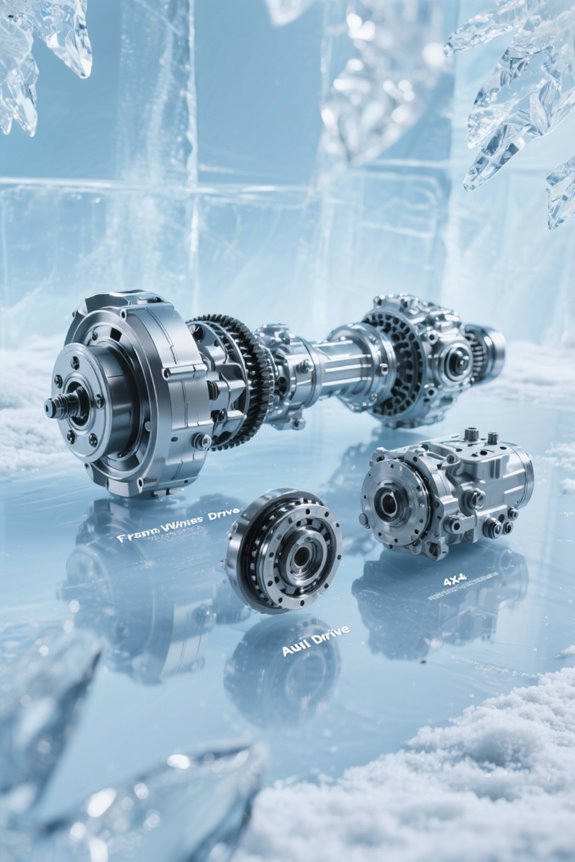
While managing the bustling streets of our cities, choosing the right vehicle drivetrain can make a big difference in our winter driving experience. Front-wheel drive (FWD) is often best for stop-and-go traffic, offering great traction and fuel efficiency thanks to its lightweight design. All-wheel drive (AWD) gives us extra grip on slippery roads, though it may cost us a bit on fuel economy.
When we think of torque delivery, FWD delivers a responsive feel that suits urban driving well. While rear-wheel drive (RWD) can be fun, it usually doesn’t perform as well in wintery conditions. In urban settings, we’d be happier with FWD or AWD, keeping our journeys smoother and safer. Additionally, considering options like multiple heating levels in vehicle accessories can enhance comfort during cold winter drives.
Vehicle Drivetrain Suitability for Rural Driving
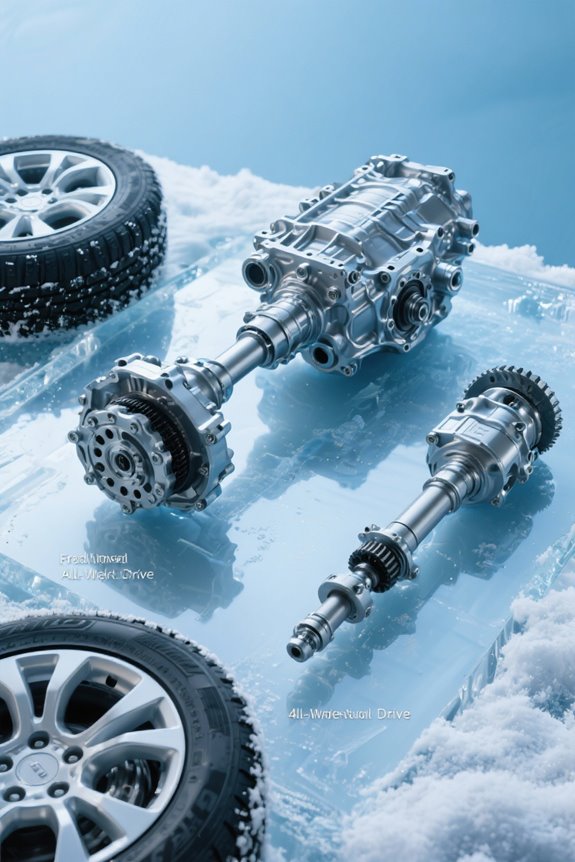
If we want to tackle the challenges of rural winter driving, choosing the right drivetrain is essential. For ideal performance, we recommend all-wheel drive (AWD) or four-wheel drive (4WD) vehicles. They offer fantastic traction enhancements, especially on snow- and ice-covered roads. While front-wheel drive (FWD) is better than rear-wheel drive (RWD), it often falls short in deep snow.
AWD and 4WD also help us maintain speed stability when conditions get tough. With drivetrain enhancement, we can reduce the risk of getting stuck in icy patches and avoid skidding on unpredictable surfaces. In rural areas, where road maintenance isn’t as frequent, having a reliable drivetrain can be the difference between a safe drive and a slippery adventure. Additionally, using vehicles equipped with ergonomic designs can greatly improve handling and comfort during long winter drives.
Winter Tires Vs All-Season Tires

Choosing between winter tires and all-season tires can feel like a tough decision, especially when winter weather sneaks up on us. We often think about tire performance and how well our ride will handle snow and ice. Winter tires shine in these conditions, gripping better and offering shorter stopping distances. Meanwhile, all-season tires work fine in mild winters but struggle in heavy snow or icy roads.
Let’s keep seasonal maintenance in mind, too. Winter tires need to be swapped out each season, which involves some added cost. In colder areas, investing in winter tires might be the best choice for our safety. Ultimately, it’s about choosing what safety feels right for us this winter. Additionally, tire chains can significantly enhance traction on icy roads, making them a valuable accessory for winter driving.
Crash Risks in Urban Vs Rural Driving

When we hit the road during winter, understanding the differences in crash risks between urban and rural settings is essential to keeping ourselves safe. Rural areas account for about 70% of car accident fatalities in some states, despite fewer overall crashes. This tells us that rural fatalities can be more severe, especially with the higher speeds and lack of traffic controls.
In urban areas, we see more crashes, particularly at intersections, but those aren’t always fatal. Speeding and distractions affect both settings; however, we should be extra cautious in rural areas. With longer emergency response times, it’s important we drive smart—hold onto that steering wheel tightly and buckle up, friends! Additionally, using a reliable keyhole de-icer can help prevent lock issues that may arise from freezing temperatures, ensuring your vehicle is ready to go when you need it.
Safety Considerations for Urban Drivers
As winter sets in, we’ve got to be extra mindful of the unique challenges urban driving throws our way. With decreased daylight and artificial lights creating glare, our urban visibility is often compromised. To avoid accidents, we should increase our following distance and be cautious around intersections where icy patches may hide.
Let’s also remember the pedestrian risks—snowbanks push walkers into the street. Slow down when approaching crosswalks, and always be ready to stop. These small adjustments can keep everyone safe. Additionally, keeping a portable windshield defroster handy can help ensure clear visibility in icy conditions.
Lastly, let’s stay prepared with an emergency kit in our car, just in case we get caught in traffic. Winter’s tricky, but by being aware, we can navigate it together.
Safety Considerations for Rural Drivers
More than half of winter traffic fatalities occur on rural roads, highlighting the need for caution. We understand that rural weather can be unpredictable, often leading to icy conditions that aren’t promptly treated. It’s essential to remember that rural roads tend to have higher speed limits, which can increase the severity of accidents if we’re not careful.
Investing time in driving education is important for traversing these challenges. Let’s make it a habit to maintain a safe distance behind other vehicles and reduce our speed in bad weather. Always check the conditions before heading out—knowledge is power. In addition, utilizing effective windshield de-icer sprays can significantly improve visibility during icy conditions. And don’t forget, those long drives through the countryside can be beautiful, but safety should always come first!
Recommended Vehicle Types for Urban Driving
If we prefer a bit more space, consider the MG 3 Hybrid+, which boasts a hybrid powertrain for efficient city traffic. For those extra errands, the Toyota Aygo X’s compact design and easy parking make it a breeze. With so many great options available, we’re sure to find the perfect fit for our urban adventures. Additionally, ensuring your vehicle is equipped with effective washer fluid can enhance visibility during winter driving conditions.
Recommended Vehicle Types for Rural Driving
When it comes to tackling winter roads in rural areas, choosing the right vehicle can make all the difference. For winter readiness, we recommend considering a few specific rural vehicle types. Mid-sized to full-sized pickup trucks with 4WD excel due to their durability and enhanced traction. Compact and mid-sized SUVs with AWD offer great control without sacrificing comfort.
For those who prefer a car feel, vehicles like the Subaru Outback provide higher ground clearance and AWD for better performance. Don’t overlook rugged off-road SUVs like the Ford Bronco Sport, which balance traction and off-road needs nicely. Remember, equipping your vehicle with winter tires greatly boosts performance in snowy conditions, making winter driving safer and more efficient. Additionally, having a reliable jump starter with a peak current rating can significantly aid in ensuring your vehicle starts in extreme cold weather.
Essential Gear for Urban Drivers
As winter settles in, we’ve got to gear up for the unique challenges urban driving can bring. First off, we need waterproof insulated coats rated for our local lows. Waterproof gloves and warm hats will keep us cozy while we handle winter snow. Don’t forget extra insulated socks and sturdy, insulated boots for icy sidewalks!
For our vehicles, let’s pack an ice scraper, a small snow shovel, and jumper cables—these are key driving essentials. Also, a flashlight with batteries and emergency thermal blankets can really save us during unexpected stops. Additionally, consider using heated floor mats to keep your feet warm while driving, ensuring comfort during long commutes. Finally, having snacks and a portable phone charger means we’re set for whatever the urban winter throws at us. Let’s stay warm and safe out there!
Essential Gear for Rural Drivers
Urban driving gear is helpful, but rural winter driving needs its own special set of tools. For true rural survival, we should consider winter tires for that essential grip, along with tire chains and traction devices like MaxTrax for when we get stuck. A sturdy shovel and a come-along hand winch can make all the difference in a snowy bind.
Extra warmth is critical, so packing wool blankets and hand warmers is a must. We also need water, food, and a reliable way to communicate—think CB radios and paper maps. Finally, a battery-powered flashlight can light the way when things get dark. With these important tools, we can handle whatever rural winter throws our way.
Frequently Asked Questions
How Do Urban and Rural Driving Laws Differ in Winter Conditions?
Urban regulations usually emphasize safety and maintenance, while rural guidelines often require stricter traction measures. We should always stay informed about our area’s specific rules to drive safely in winter conditions together.
What Are the Best Winter Driving Resources for Beginners?
Driving in winter’s icy grasp feels intimidating, but beginner safety guides can anchor us. We’ll explore essential driving techniques together—smooth steering, cautious braking—to guarantee we navigate snowy roads confidently and safely, every step of the way.
How Can I Improve Visibility During Winter Driving?
To improve visibility during winter driving, we should use fog lights and wear reflective gear. Keeping our windows clear and ensuring all lights work can enhance safety, helping us feel more confident on the road together.
What Should I Include in a Winter Emergency Kit?
We think it’s ironic how we often forget essential supplies for winter emergencies. Let’s pack safety tools like blankets, a first aid kit, and a flashlight—after all, who wouldn’t want to feel prepared together?
How Often Should I Check My Vehicle During Winter?
We should check our vehicles regularly during winter, ideally following a winter checklist. A good routine includes testing the battery, inspecting tires, and ensuring fluids are topped up to keep us safe on the road.


