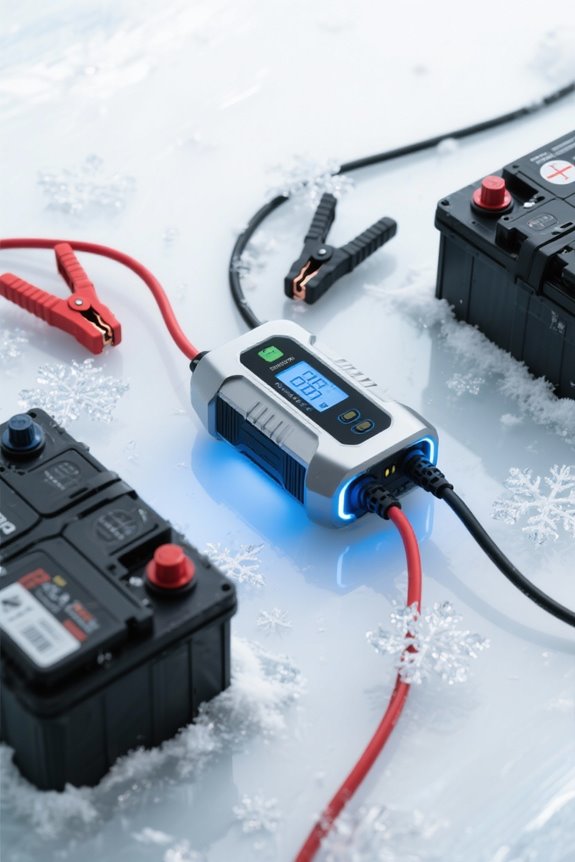


To keep our jump starters in great shape, we should charge them every 3 to 6 months, even if we haven’t used them. Store them in a cool, dry spot, ideally between 50°F and 70°F, avoiding extreme temperatures. Always connect the clamps correctly to prevent sparks, and remember to let the starter rest after a few seconds of cranking to avoid overheating. For more tips on maximizing performance, we can check out further guidelines.
Key Takeaways
- Charge jump starters every 3 to 6 months, even if not used, to maintain optimal battery health and performance.
- Store jump starters in a temperature range of 50°F to 70°F to prevent battery degradation and prolong lifespan.
- Regularly test battery capacity and voltage; replace jump starters showing significant capacity loss or age-related decline.
- Allow jump starters to cool down for 3 minutes after 6 seconds of cranking to prevent overheating and extend lifespan.
- Keep jump starters at a 50-80% charge level when storing to ensure reliability and avoid deep discharge issues.
Regular Charging Practices
Since jump starters are vital for any vehicle owner, keeping them in top shape is important. To make certain our jump starter remains reliable, we should follow recommended charging schedules. It’s best to charge them every 3 to 6 months, even if we haven’t used them. This routine helps maintain battery health, preventing any deep discharge that could damage our lithium batteries.
Using smart chargers is a great way to keep things easy. They adjust the charging speed, which reduces heat and extends battery life. Remember, we should always check the battery status before charging to avoid unnecessary power-ups. By sticking to these practices, we can guarantee our jump starters will be there when we need them. Additionally, utilizing smart charging technology can enhance the efficiency and longevity of our jump starter batteries.
Optimal Storage Conditions

To keep our jump starter in top condition, we need to pay attention to where and how we store it. Ideally, we should keep it in a safe environment with temperatures between 50°F and 70°F. Storing it below 32°F or above 122°F can seriously degrade the battery.
We should aim for a dry, dust-free spot, like the glove box or trunk, but let’s avoid extreme temperatures. If we’ve used it in the cold, it’s best to let it warm up before charging. Keeping the battery partially charged at 50–80% can also prolong its life. Regular maintenance, including checking performance drops, is crucial, so let’s check on it every few months—that way, we’re ready to go anytime we need it!
Essential Safety Precautions

While jump starters are incredibly handy, we need to be careful when using them. First, let’s make sure we’re equipped with the right safety gear, like gloves and glasses, before handling the clamps. Always connect the positive clamp to the positive terminal and the negative clamp to the vehicle’s chassis. This helps avoid sparks.
It’s essential to use proper handling techniques, too. Remove any metal jewelry to prevent accidental short circuits. And remember, we should never use the clamps for other devices—stick to jump-starting. Finally, disconnect the clamps quickly after the engine starts to avoid damaging our jump starter. By following these tips, we can keep our jump starters safe and effective for years to come! Additionally, ensuring your jump starter features safety mechanisms like reverse polarity protection can further enhance safe usage during emergencies.
Routine Maintenance Checks

We all know that taking care of our jump starters can make a big difference in how well they work. Regular visual inspection is key. Let’s check the cables for any fraying or damage. This avoids those awkward moments when we need a jump and our starter fails.
We should also examine the casing. If we spot cracks, they could harm the internal components. Also, make certain the clamps and connection points are free from corrosion—this helps maintain electrical flow.
Lastly, wipe the jump starter exterior with a soft cloth and clean those clamps. Keeping everything tidy enhances cable maintenance and prolongs our jump starter’s life. A little effort goes a long way! Additionally, ensuring that the jump starter is stored in a dry, cool place can prevent issues like rust, similar to how tire chains require proper storage to enhance durability.
Effective Duty Cycle Management

If we want our jump starters to work when we need them most, understanding the concept of duty cycle is crucial. This means knowing that after a quick 6 seconds of cranking, we should let our unit rest for a full 3 minutes. By doing this, we reap the duty cycle benefits, keeping our jump starter’s components cool and functional. Ignoring these guidelines can lead to overheating risks, reducing the lifespan of our jump starter. Imagine trying to start a car, and it fails because we didn’t give our unit enough rest. So let’s get into the habit of sticking to those time limits—it’s an easy way to guarantee our jump starter remains reliable for every emergency. Additionally, regular maintenance, including monitoring power capacity and ensuring proper charging, can significantly enhance the longevity of your device.
Investing in Quality Jump Starters
When we think about jump starters, choosing a quality model can make all the difference. Quality jump starter brands like NOCO and Hulkman offer peak amps from 2000 to 10000, perfect for any vehicle. They also come with great lithium-ion benefits: fast charging, long-lasting power, and a lightweight build. Investing in models with 200-450 CCA guarantees they work well even in cold weather. Safety features, like reverse polarity protection and LED lights, bring peace of mind. Plus, many options, like the Jump-N-Carry, have extra USB ports for charging devices. Additionally, it’s important to consider the average lifespan of the jump starter to ensure you get reliable performance over time.
Understanding Vehicle Compatibility
Selecting a high-quality jump starter is just the first step; confirming it’s compatible with your vehicle is equally important. Most passenger vehicles use 12V batteries, but heavy-duty trucks may need 24V compatibility. We definitely want to avoid voltage mismatches, as they can damage both the jump starter and your vehicle.
Next, let’s talk engine specifications. Smaller gas engines generally need 400–800 peak amps, while larger ones require 1000–2000 or more. Diesel engines? They typically need even more power. Always check the jump starter’s peak current and cold cranking amps against your vehicle’s needs. It’s like finding the perfect fit! Additionally, ensure to assess power output specifications to confirm a smooth start every time.
User Education and Training
Understanding how to properly use and maintain a jump starter is essential for ensuring it works when we need it most. We recommend familiarizing ourselves with user manuals for specific instructions and best practices. These guides are packed with key information that can save us a lot of trouble down the line.
To further enhance our skills, attending user workshops can be a game-changer. In these sessions, we can learn about effective charging techniques, routine checks, and proper care from experienced users. Plus, sharing our own tips and experiences helps build a supportive community. Let’s invest time in education; it’s our best defense against unexpected failures when we’re in a pinch. Moreover, understanding the safety features of various models can significantly reduce the risk of accidents during use.
Preventing Deep Discharge
To avoid the headaches that come with deep discharge, we need to keep an eye on our battery’s charge levels. Deep discharge causes can often sneak up on us, like excessive current draw or leaving our jump starter unused for too long. By regularly monitoring charge levels, we can avoid the battery discharge effects that reduce capacity and damage our batteries.
Let’s make it a habit to keep our batteries above 20% charge—this simple step can greatly prolong their lifespan. It is also beneficial to use lithium battery warming pads to maintain optimal operating temperatures, especially in cold conditions. If we notice the battery is running low, let’s charge it before it drops too far. A little care goes a long way, and we’ll have reliable jump starters ready when we need them.
Organizing Storage for Jump Starters
While we might think just tossing our jump starters in a random corner is fine, taking the time to organize their storage can really make a difference. Let’s consider some practical storage solutions. First, choose a moderate temperature space, ideally between 50°F and 70°F. Sturdy cases help protect our jump starters from damage, and storing them indoors avoids extreme weather.
To make retrieval easy, keep them in accessible spots, away from flammable materials. Don’t forget to label them with charge levels and dates! Separating jump starters from their accessories simplifies organization and encourages regular checks. Following these organization tips will guarantee our jump starters are always ready when we need them, without hassle. Additionally, maintaining charge levels is essential to ensure they function optimally when needed.
Monitoring Age and Wear of Components
As jump starters age, keeping an eye on their condition can save us from unexpected breakdowns. We need to track the charge cycles and the manufacture dates. Lithium-based units usually last 3-5 years, even when not used. Regular capacity testing is essential; if we lose 35% of the original capacity, it’s time to think about a replacement.
Voltage monitoring is just as important. Checking the open-circuit voltage can quickly tell us if our jump starter is in good shape. If it’s drifting from the norm, it might be deteriorating. Also, testing under load simulates real-world usage. Remember, if cranking speed is slow, our jump starter might be wearing out, even if the voltage looks decent.
Frequently Asked Questions
How Often Should I Test My Jump Starter?
We should test our jump starter every three months to guarantee battery health. Regularly checking allows us to prevent potential problems and keep our trusty tool ready for those unexpected roadside situations we all face together.
Can Jump Starters Be Used in Electric Vehicles?
Yes, jump starters can be used in electric vehicles, but we need to verify they’re compatible. Proper usage is essential; following manufacturer guidelines helps us avoid potential battery damage and guarantees safety for all.
What Is the Lifespan of a Jump Starter Battery?
We’re all dreaming of a jump starter that lasts forever, but in reality, battery lifespan ranges from 2 to 5 years. With some maintenance tips, though, we can definitely extend its life together!
Is There a Recommended Brand for Jump Starters?
If we’re looking for recommended brands, we can’t go wrong with NOCO and Hulkman for reliability. For budget options, AvaPal and GOOLOO offer excellent performance. Together, we’ve got choices that fit every need!
How Can I Dispose of an Old Jump Starter Safely?
We can’t just toss our old jump starters like they’re yesterday’s trash! Let’s follow disposal guidelines by checking recycling options at local facilities, ensuring we keep our environment safe and our conscience clear. Together, we’ll do this right!