
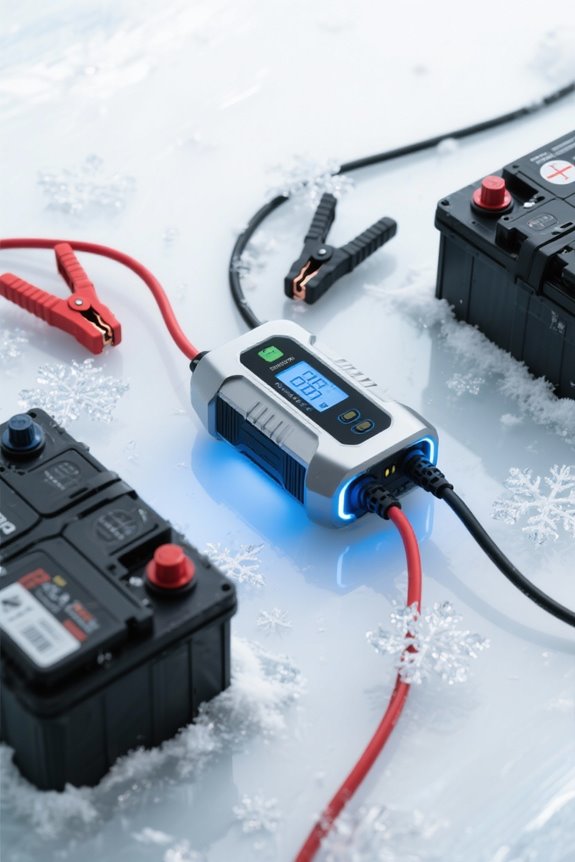

Using a Jump Starter Across Different Vehicles
Using a jump starter can be super handy for various vehicles, but we need to understand battery types first. Most cars run on 12V systems, and jump starters work well across different models if they’re compatible. Look for features like reverse polarity protection and ease of use. Always follow safety precautions, and keep your jump starter charged and maintained. Curious about how to test its effectiveness? There’s more you can learn to make the most of your jump starter!
Key Takeaways
- Ensure the jump starter is compatible with the vehicle’s 12V battery system before use to prevent damage.
- Check the peak amp requirements of the specific vehicle type to guarantee adequate power while jump-starting.
- Look for jump starters with safety features like reverse polarity protection to enhance user safety during operation.
- Regularly maintain your jump starter by charging it after each use and inspecting it every 90 days for optimal performance.
- Monitor performance in extreme weather conditions, as some jump starters may vary in effectiveness based on environmental factors.
Understanding Different Battery Types
When we think about jump-starting a car, understanding the type of battery in that vehicle is key. Most cars use lead-acid batteries, which are popular for being affordable and reliable. They come in two forms: flooded, which need maintenance, and sealed, which are user-friendly and safer.
For vehicles with higher electrical demands, like those that frequently stop and start, AGM batteries are a better choice. They last longer and work well with extra accessories. If you’re driving an electric or hybrid vehicle, lithium-ion batteries have the best performance comparison, but they’re pricier. Knowing these battery characteristics helps us make informed decisions when we need to jump-start a car, ensuring a smoother experience. Additionally, understanding the power output specifications of jump starters is essential for their effectiveness across different battery types.
Jump Starter Compatibility With Vehicle Types

Finding the right jump starter can feel overwhelming, but most of us don’t need to worry too much. Nearly all cars, SUVs, and motorcycles use a 12-volt battery system, so a compact jump starter can work across many vehicle types. It’s essential to check the manufacturer’s packaging to confirm 12V compatibility, especially for older or specialty vehicles.
When considering jump starter types, engine size matters too! For smaller cars, 400-600 peak amps are usually fine, while larger trucks or diesels might need over 1000 peak amps. Remember, just because a jump starter claims compatibility doesn’t mean it’ll handle your vehicle’s needs perfectly in cold weather or extreme conditions. Always check reviews and specs before diving in! Additionally, peak current capacity is crucial as it determines the starting power required for different engines.
Key Features for Cross-Vehicle Functionality

A good jump starter is like having a reliable friend in your trunk, ready to help whenever you need it. When choosing one, we need to focus on power output and user interface. For instance, jump starters with around 4000 amps can start larger engines, while 1000-amp units suit smaller vehicles.
A user-friendly interface, with clear controls and instructions, makes it easier, especially for those new to jump starting. Look for models that include features like automatic detection, which helps us avoid common mistakes. Finally, a compact design improves portability, so we can easily store and carry our jump starter across different vehicles. These options make our jump starter a versatile tool for our diverse needs. Additionally, ensure the model includes safety features like reverse polarity protection to enhance user safety during operation.
Safety First: Precautions When Jumping Vehicles

Jumping a vehicle isn’t just about connecting cables; it’s important to take safety seriously. Before we even think about jumping, let’s equip ourselves with safety gear like insulated gloves and protective eyewear. These small steps can protect us from electric shock and battery acid.
We should always follow emergency procedures. First, check the battery terminals to avoid any confusion with high-voltage components. Remember, we must keep the vehicles turned off while we connect the cables. To further minimize risks, we can avoid wearing jewelry that might conduct electricity.
Lastly, let’s guarantee we’re in a well-ventilated spot to avoid any buildup of hydrogen gas. Following these precautions keeps us safe and our vehicles happy! Additionally, using a 12V defroster fan can help ensure clear visibility during winter conditions after a jump start.
Practical Steps for Using a Jump Starter

Using a jump starter can really save the day when your car won’t start. Let’s kick things off with some jump starter tips. First, we need to check if our jump starter is compatible with our vehicle. We should verify it has enough power and meets the vehicle’s specifications.
Before jumping, let’s inspect the cables and clamps for any damage. Now, it’s time for vehicle readiness: turn off the car, locate the battery, and secure the clamps—red on positive, black on negative.
Once connected, turn on the jump starter and wait a moment. When we attempt to start the vehicle, if it doesn’t work, no worries—give it another shot after a few minutes. It’s important to ensure the jump starter has a peak current rating suitable for your engine type. Happy jumping!
Limitations of Jump Starters
While portable jump starters offer great convenience, they do come with a few limitations that we should keep in mind. First, there’s the cost implication. They’re generally pricier than traditional jumper cables, and don’t forget about the need for regular charging and maintenance.
Also, engine limitations can apply. Most jump starters handle engines up to 8 cylinders, leaving larger engines out.
We must consider weather effects, too. Extreme temperatures can affect performance and battery life. Finally, using these in remote areas can be a double-edged sword. They’re handy when isolated but limited in capacity. Consequently, knowing these constraints helps us make better decisions when choosing the right jump starter. Additionally, it’s important to remember that cold cranking amps play a crucial role in performance during low temperatures.
Common Mistakes to Avoid
A successful jump start can feel like magic, but we often sabotage ourselves with simple mistakes. First, let’s be careful with our cable connections. Always connect the red clamp to the dead battery’s positive terminal first. Then, hook it up to the donor battery. We should remember to turn off all electrical accessories, like radios and chargers, before starting. Otherwise, they can drain power, making it harder to jump-start.
Also, let’s avoid using low-quality cables. They can lead to poor connections and overheating. It’s essential to choose a jump starter with reverse polarity protection to prevent damaging the vehicle’s electrical system. And don’t forget to wear protective gear and keep our workspace clear to prevent accidents. By sidestepping these common blunders, we can guarantee a smoother jump-start experience every time.
Assessing Your Vehicle’s Power Needs
When we think about jump-starting a vehicle, knowing its power requirements is key to success. First, we should start by evaluating amperage requirements for our specific vehicles. For most of us, a normal car needs between 400 and 600 amps to jump-start reliably. However, smaller cars may only need about 150 amps.
It’s also essential to reflect on vehicle age. Older vehicles and deeply discharged batteries will often require more power. If you’re in colder weather, remember that it increases the amperage needed due to reduced battery performance. Additionally, understanding charging speed and efficiency can help ensure you’re using the right jump starter for your vehicle’s needs. So, let’s take the time to understand these factors; adjusting our approach can lead to much smoother jump-start experiences.
Choosing the Right Jump Starter Model
Understanding your vehicle’s power needs sets the stage for selecting a jump starter that works best for you. First, we should look at jump starter features. Do we have peak or cranking amperage ratings? A model like the NOCO Boost HD offers up to 2000A, great for larger engines.
Next, consider performance ratings. Reliable brands, such as NOCO, excel in performance tests, while budget options like the Fanttik T8 APEX still deliver solid capabilities.
Lastly, don’t forget about convenience. Longer cables, built-in lights, and easy-to-use interfaces make a big difference on the road. By weighing these factors, we can confidently choose the jump starter that fits our needs and guarantees we’re prepared for any situation. Additionally, choosing a model with high power capacity ensures compatibility with a wider range of vehicle engines.
Importance of Portability in Jump Starters
Have you ever found yourself stranded with a dead battery, desperately wishing you had a simple solution? That’s where the portability benefits of jump starters come in. They’re compact and lightweight, which means we can easily toss one in our car or even our backpack. This travel convenience is a game-changer, especially in remote areas where help might not be around.
Imagine needing a jump and realizing that your portable starter’s right there, ready to save the day! Unlike traditional cables, there’s no need for another vehicle. With features like built-in safety precautions, these devices not only make life easier but also give us peace of mind on the road. Additionally, many models include multiple protection mechanisms that enhance user safety. So, let’s keep one handy!
Additional Functions and Their Benefits
When considering a jump starter, remembering these extra functions can truly enhance our overall roadside readiness. Plus, who wouldn’t want versatile tools at their disposal?
Maintenance Tips for Jump Starters
We all love the extra features that come with modern jump starters, but keeping them in tip-top shape is just as important. To guarantee performance optimization and battery longevity, let’s keep a few maintenance tips in mind.
First, charge your jump starter between 70-80%, and always recharge it after each use. We should check it every 90 days, especially during non-use, to prevent deep discharge damage. Store it in a cool, dry place, avoiding extreme temperatures and direct sunlight, which can harm the battery.
Regularly inspect your cables for damage, and clean the clamps to prevent corrosion. Following these simple practices helps us prolong our jump starter’s life and keeps it ready for any emergency!
Testing Your Jump Starter Effectiveness
Ever wondered how well your jump starter really performs across different vehicles? We need to test its effectiveness to verify it shines in real-world performance. Start by using it on vehicles with fully or nearly dead batteries, as this gives us a true sense of its power. Track the criteria like successful engine starts, recharge times, and how easy it is to use.
Don’t forget about features like manual overrides—some jump starters need that little nudge for stubborn batteries. Also, keep an eye on cold weather performance; some models do better than others when temperatures drop. Regular tests can save us from an unexpected stall when we need it most. So, let’s keep our jump starters ready for action!
Addressing Voltage and Current Mismatch Risks
Jump starters might seem straightforward, but knowing the risks of voltage and current mismatches is key for safe usage. Most jump starters are designed for 12V systems, so using one on a higher-voltage vehicle can cause serious damage. It’s essential to check that the voltage rating of our jump starter matches the vehicle’s battery voltage to avoid issues.
Additionally, excessive current from mismatched specs can stress our vehicle’s battery and its sensitive electronics. Thankfully, modern jump starters include features for current regulation, reducing risks from voltage fluctuations. Let’s remember, when in doubt, keep it simple: always verify specifications before connecting. It’ll save us headaches and keep our vehicles running smoothly!
Recommendations for Multifunction Jump Starters
When shopping for a multifunction jump starter, it’s wise to contemplate a few key features that can really make a difference on the road. We recommend looking for models with high cranking amps, like the Clore Jump-N-Carry JNC770R, ideal for larger engines.
Integrated tire inflators, such as in the NOCO Boost Air AX65, are super useful for emergencies. Plus, USB ports and LED work lights add extra functionality.
Always check jump starter reviews to gauge reliability and performance. Popular jump starter brands like Hulkman and GOOLOO offer solid options for various needs. With the right choice, you’ll feel prepared for anything the road throws at you!
Frequently Asked Questions
Can I Use a Jump Starter in Extremely Cold Weather?
Yes, we can use a jump starter in extremely cold weather, but its battery performance may drop. It’s vital to choose models designed for cold temperatures to guarantee reliable starts when we need them most.
How Long Does It Take to Fully Charge a Jump Starter?
It can take anywhere from 2 to 48 hours to fully charge a jump starter, depending on its capacity. Let’s guarantee we’re always prepared, so our adventures together are safe and worry-free!
Are There Weight Limits for Jump Starters in Certain Vehicles?
There aren’t strict weight limits for jump starters in vehicles, but we should always check jump starter specifications and vehicle compatibility. Ensuring our choice fits our needs helps us stay safe and prepared on the road.
Is It Safe to Use a Jump Starter on Hybrid or Electric Vehicles?
Yes, we can safely use a jump starter on hybrid models, but we must remember electric safety. Think of it like watering a delicate plant; follow guidelines, and it’ll thrive without unexpected shocks or damage.
Can I Store a Jump Starter in My Vehicle Year-Round?
Yes, we can store a jump starter in our vehicle year-round, but we should follow storage guidelines and guarantee proper jump starter maintenance to protect battery health, performance, and longevity. Let’s keep it safe together!


