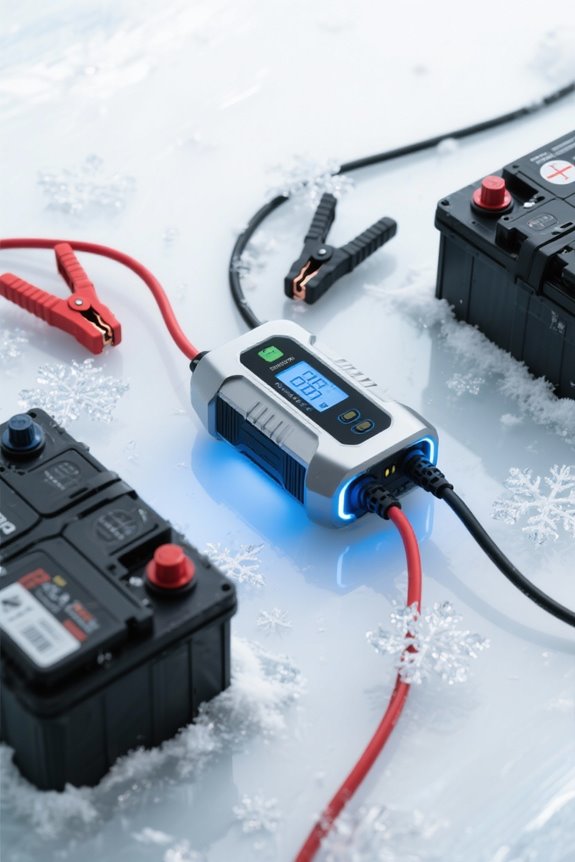


To store our battery jump starter right, let’s keep it clean and dry, away from extreme temperatures. Ideally, we should store it between 50°F and 70°F, protected from sunlight and moisture. We’ll also want to charge it when it drops to about 20% and maintain levels between 20% and 80% for battery health. Ultimately, it’s smart to check compatibility with our vehicles and inspect cables regularly. There’s more to explore, so let’s keep going!
Key Takeaways
- Store the jump starter in a cool, dry place away from direct sunlight and extreme temperatures to protect its battery health.
- Keep the charge level between 20% and 80%, and recharge when levels drop to about 20% for optimal maintenance.
- Use a protective case to shield the jump starter from dust, moisture, and physical damage during storage.
- Regularly inspect cables and clamps for wear and ensure all components are clean and free from corrosion.
- Bring the jump starter indoors when temperatures drop below freezing to prevent battery damage.
Optimal Storage Conditions
When we think about the best way to store a battery jump starter, it’s vital to keep a few things in mind. First off, temperature management is important. We should aim to keep our jump starters in a cozy environment between 50°F and 70°F. Extreme heat or cold can damage the battery, so let’s avoid our cars in summer or winter conditions.
Next, let’s consider environmental factors. Storing in a clean, dry space is key; a shed or garage works well. We should also steer clear of direct sunlight and moisture, as these can cause corrosion. Using a protective case can keep our jump starters safe from bumps and dust. Additionally, ensuring that the jump starter has UL or CE certifications helps guarantee that it meets safety standards, which is crucial for reliable performance. Following these tips means our jump starters will always be ready when we need them!
Battery Charge Maintenance

It’s essential for us to keep a close eye on our jump starter’s charge levels. Ideally, we should charge it when it falls to around 20% to avoid deep discharge damage. Discharging below this can hurt battery health and efficiency. For the best results, let’s aim to keep the charge between 20% and 80%.
We should also perform an equalizer charge when suggested. This helps balance voltage and extends battery life. Additionally, using a compatible charger guarantees our jump starter remains safe. If we notice the charging time increasing, it might be a sign our battery’s health is deteriorating. Let’s keep an eye on those charge indicators, and we’ll keep our jump starter ready when we need it most! Furthermore, ensure that the jump starter has safety certifications to protect against overcharging and other potential hazards.
Physical Storage Considerations
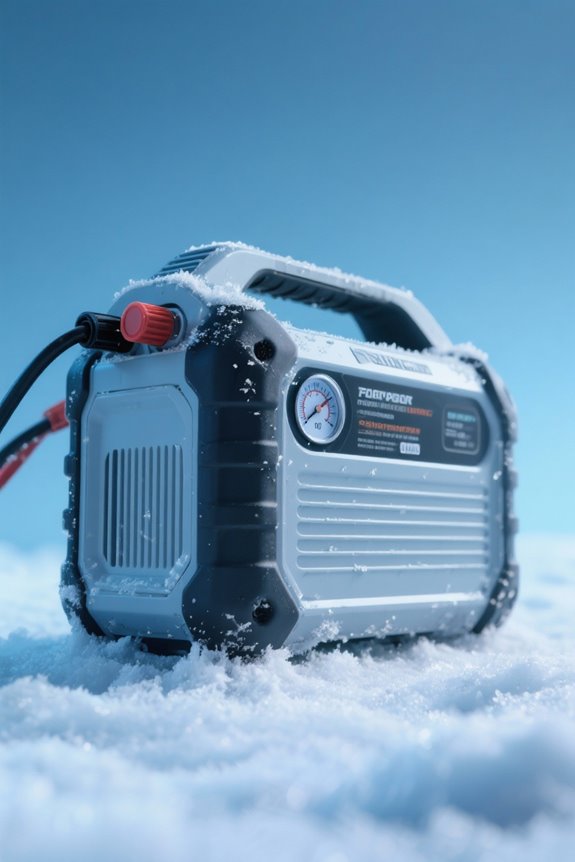
To keep our battery jump starter in top shape, we need to pay attention to how and where we store it. Using protective cases is a smart move; they shield our jump starter from shocks and drops, making it last longer.
Let’s keep it stored in a cool, dry place, ideally between 50°F and 70°F. Avoid any extreme temperatures or direct sunlight, as these can harm the battery. Additionally, ensure the jump starter is compatible with high battery capacity to facilitate multiple jump-starts per charge.
When it comes to storage orientation, most jump starters can rest in any position, but let’s avoid tossing them loose in compartments. Instead, secure the clamps and cables to prevent damage. Regularly checking our protective cases for wear will help maintain that extra layer of protection, ensuring they’re ready when we need them.
Safety Practices for Battery Storage

While we might think storing a battery jump starter is simple, a few safety practices can make all the difference in keeping it in good working order. First, let’s keep it in a dry, dust-free environment to avoid corrosion and guarantee those internal components stay safe. We should also perform regular safety inspections. Check the cables and clamps for any signs of wear or battery acid; cleaning them can prevent future issues. When temperatures drop below freezing, it’s best to bring the jump starter indoors to avoid damage. Finally, remember to keep it charged at 70-80%. This way, our jump starter will be ready when we need it, and we can avoid the dreaded dead battery situation! Additionally, consider using a battery maintainer to ensure your jump starter remains charged and in top condition during long storage periods.
Compatibility and Usage Readiness

Understanding compatibility and usage readiness is essential for getting the most out of our battery jump starter. We need to perform compatibility checks based on our vehicle’s battery voltage—usually 6V, 12V, or 24V. If we drive a standard car, a 12V starter will work; for larger trucks, we’ll want a 24V option.
Also, let’s consider usage frequency. If it’s been a while since we last used the jump starter, we should recharge it every few months. This will keep it ready for that unexpected moment on the road. Plus, ensuring our jump starter matches our engine size helps prevent any starting failures—funny how a little detail can make a big difference! Additionally, regular recharging is crucial for maintaining battery longevity during winter months.
Frequently Asked Questions
Can I Store a Jump Starter in My Vehicle’s Trunk?
We can store a jump starter in our vehicle’s trunk, but we should be cautious of trunk temperatures. Proper placement and regular checks guarantee it remains safe and ready for when we need it.
How Do I Know if My Jump Starter Is Malfunctioning?
If our jump starter’s not powering up, we should check battery maintenance and apply troubleshooting techniques. Signs like smoke or warning lights indicate malfunction. Regular inspections help us guarantee everything’s working as it should.
What Are the Signs of a Depleted Jump Starter?
We’ve all been there—glitchy jump starters can be a right pain! Look for depleted indicators like low power output, erratic performance, or a noticeably shorter jump starter lifespan. Let’s keep our adventures running smoothly!
How Long Do Jump Starter Batteries Typically Last?
Jump starter batteries typically last between 2 to 5 years, depending on usage and maintenance tips. By keeping them charged and stored properly, we can prolong their lifespan and guarantee reliable performance when we need it.
Can Environmental Factors Affect Jump Starter Performance?
Absolutely, environmental factors can impact jump starter performance. We’ve seen how temperature extremes and high humidity levels affect them. Let’s make certain our jump starters stay in ideal conditions, so we’re always ready for emergencies together!