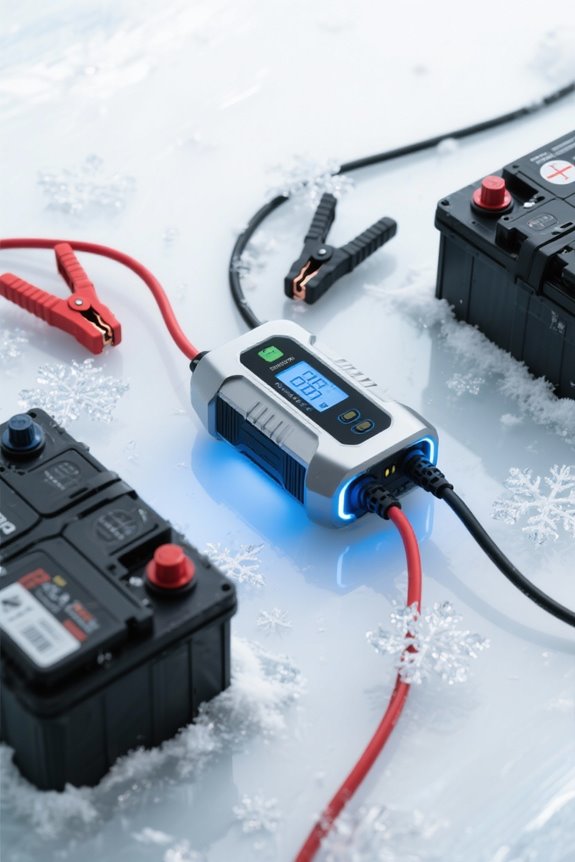


Portable battery jump starters can be reliable, but their effectiveness varies. We must consider battery capacity and environmental conditions, like extreme heat or cold, which can impact performance. Some brands may exaggerate their product capabilities, so it’s wise to check reviews before purchasing. Keeping your jump starter charged and stored within a moderate temperature range will also help. Let’s look at other important factors to make an informed choice.
Key Takeaways
- Battery performance can vary significantly between brands, making reliability assessments essential for portable jump starters.
- High temperatures can reduce battery life, while cold can significantly decrease power output, impacting reliability.
- Larger-capacity batteries provide more jump starts, enhancing dependability before needing a recharge.
- Reliable clamps and sturdy connections are crucial for effective operation and user safety during jumps.
- Regular charging and proper storage conditions can significantly improve the longevity and performance of jump starters.
Understanding Performance Reliability
When it comes to jump starters, we want to know they’ll work when we need them, right? Battery performance is essential for jump starter reliability. Some brands overstate their capacity, leaving us short when it counts. Products with larger-capacity batteries can jump-start multiple times before needing a recharge, staying ready for emergencies. Features like manual overrides help in tricky situations, so we recommend looking for jump starters with those. Reliable clamps and sturdy connections make a big difference too, especially under the hood. Plus, digital displays give us real-time information about battery life and output, helping us evaluate reliability before an emergency. Additionally, many models offer peak current outputs that accommodate a range of engine sizes, enhancing their utility for different vehicles. Remember, not all units are created equal, so choose wisely to keep our engines running smoothly.
Effects of Temperature on Performance

Understanding how temperature affects jump starters is key to guaranteeing they’re ready when we need them. High temperatures can cut battery life considerably. For instance, every 15°F above 77°F halves the lifespan. Storing jump starters in moderate conditions—ideally between 50°F and 70°F—can keep them in top shape.
On the flip side, cold temperatures can reduce power by up to 60%. That’s why we should always take safety precautions and avoid storing jump starters in extremes. Instead, let’s keep our jump starters in cool, dry places. Regularly charging them, even when not in use, also helps maintain performance. By following these tips, we’ll guarantee that our jump starters are dependable, no matter the season! Additionally, most jump starters are designed to operate in temperatures as low as −4°F to ensure reliability during winter conditions.
Manual Override Features and Their Importance

Although many jump starters are designed to work automatically, there are times we might need to use the manual override feature. This option is essential for jump-starting batteries that are too depleted for automatic detection, often below 2-3 volts. Remember, while manual override helps in tricky situations, it bypasses safety protocols, so we need to handle it carefully.
We should only activate this feature after making sure the clamps are properly connected. Following user guidelines is vital—one wrong move could lead to sparks or incorrect polarity connections. Once engaged, look for LED indicators to confirm the jump starter is ready. By understanding and practicing these steps, we increase our confidence in handling emergencies safely! Additionally, ensuring the jump starter has multiple protection mechanisms can further enhance safety during manual operations.
Variability in Charging Small Electronics

It’s important to realize that not all jump starters are created equal, especially when it comes to powering our small electronics. For instance, some jump starters come with multiple USB ports, allowing us to charge various devices like phones and tablets. However, the power efficiency and charging speeds can vary considerably between models.
We might notice that some jump starters charge our devices quickly, while others take their sweet time. It’s vital to check the battery capacity and build quality before we invest. Always keep in mind that environmental conditions, like temperature, can also affect performance. By understanding these differences, we can better choose a jump starter that fits our needs, ensuring we’ll always be powered up when we need it most. Additionally, considering high power capacity in a jump starter can significantly enhance its ability to charge devices effectively.
Assessing Battery Capacity Claims

When we look at portable jump starters, it can be tricky to figure out how reliable those battery capacity claims really are. Many brands boast impressive numbers, but we often find capacity discrepancies when we test them out. For instance, a jump starter rated at 50,800mAh might only deliver half that in real-world use due to marketing practices that inflate figures.
These batteries are designed primarily for short bursts of high power, making them less effective for steady, slower discharges. To make informed choices, we should look at actual performance data, not just fancy claims. Additionally, understanding the peak current capability of a jump starter can help gauge its effectiveness in real-world scenarios. So, before we buy, it’s smart to compare reviews and conduct our own tests if possible. This way, we can avoid disappointment later!
Recharge Time Considerations
Understanding Recharge Time****
Understanding the recharge time for portable jump starters is vital for confirming we’re prepared in emergencies. Recharge times can vary widely, so it’s imperative to evaluate the model we choose. For instance, some jump starters like the CEN-TECH 3-in-1 may take up to 48 hours for the initial charge, while others, like the TYPE S, can be ready in just 2-2.5 hours with quick charge methods. Additionally, models with a minimum battery capacity of 8,000mAh often provide faster recharge times, allowing for multiple uses without long waiting periods.
Tips for Effective Charging****
To optimize recharge efficiency, we should use high-quality charging accessories and follow proper maintenance tips, like charging regularly. Checking the indicators on our devices can help us keep track of the progress. By recharging after each use or every few months, we’ll guarantee our jump starter is always ready when we need it.
Key Models With Strong Performance
After we’ve covered recharge times, let’s talk about the jump starters that really deliver when it counts. The NOCO Boost X Series stands out with up to 1,000 amps, making it great for various vehicles. For added convenience, the Clore Automotive Jump-N-Carry has generous 24-inch cables to reach hard-to-reach battery terminals. User experiences often highlight the Hulkman Alpha85S for its digital display and long battery life. And if you’re looking for a lightweight option, the Cobra 1000A Jump Starter is just 1.3 pounds yet powerful. Additionally, it’s important to consider peak amp ratings to ensure compatibility with vehicle needs.
Analyzing Battery Technology Types
As we explore battery technology, it’s important to know the different types available and how each can affect jump starters. Understanding battery chemistry helps us make better choices.
Lead-acid batteries are the oldest but the heaviest, with the lowest energy density. In contrast, Lithium-ion batteries have the best energy density and are lightweight, making them great for modern applications. AGM and Gel batteries offer maintenance-free options, with AGM performing well under high electrical loads.
EFB batteries are a solid middle ground, enhancing durability for entry-level start-stop systems. By knowing these differences, we can pick a jump starter that fits our needs and lifestyle, ensuring reliability when we need it most. Additionally, many modern jump starters incorporate advanced safety features that enhance user confidence during operation.
Self-Discharge Rates of Different Batteries
If we’re not careful, the battery in our jump starter can lose charge over time, leaving us stranded when we need it most. The self-discharge rate varies with battery chemistry. For instance, lithium-ion batteries start at about 5% loss in the first 24 hours and fall to 1-2% monthly. They’re good for our jump starters since they hold charge longer. Lead-acid types lose around 10-15% right away and can drain faster, especially in heat. Nickel-based batteries, like NiMH, are even trickier, losing up to 30% soon after use. Knowing these self-discharge factors helps us choose wisely and keep our battery ready for action. Additionally, high cold cranking amps are particularly important for performance in colder climates, ensuring reliable starts when temperatures drop. Let’s stay prepared!
Importance of Battery Management Systems
Additionally, thermal management keeps the battery within safe temperature limits. Finally, data communication features share battery status and alerts, making sure we’re always informed. In short, BMS helps our jump starters work better and last longer. Moreover, safety features such as reverse polarity protection further enhance the reliability of portable jump starters.
Portability vs. Power: Finding the Balance
Balancing portability and power is a key factor when selecting a portable battery jump starter. We’ve all felt the pinch of choosing between a lightweight device that fits easily in our glove compartment and a more powerful one that can handle multiple jump starts but weighs a bit more. It’s crucial to understand the portability trade-offs involved: compact models like the NOCO Boost Plus GB40 may limit energy storage, allowing only 1-2 jumps, while larger units provide several jump starts but can feel cumbersome.
When looking for the right jump starter, we should consider these power limitations and ascertain it meets our vehicle’s needs. A mid-range option might just hit that sweet spot, giving us both power and convenience.
Enhancements for Usability and Reliability
When it comes to jump starters, usability and reliability go hand in hand. It is understood that you want devices that are user-friendly, so modern jump starters often include features like digital displays for battery life and safety functions like automatic shut-off. These additions come from user feedback, ensuring a better user experience overall.
When tackling a dead battery, we appreciate high-quality clamps and manual override buttons that enhance reliability. Look for models with quick recharge times and sturdy designs, too. Plus, longer lead lengths make connecting easier, especially in tight spots. With these thoughtful enhancements, we can feel confident in our jump starters, ready to tackle any unexpected battery issues.
Environmental Factors Impacting Performance
Since we rely on portable battery jump starters during unexpected situations, it’s essential to understand how environmental factors can affect their performance. Temperature is a big player here; cold weather can reduce starting power, while extreme heat can age the battery faster. We should aim to store our jump starters between 50°F and 70°F for best results.
Humidity impacts performance too. Moisture can lead to corrosion and even short circuits inside our jump starter. To protect them, we should store our devices in dry, low-humidity spaces, avoiding car interiors in extreme conditions. Regularly checking charge retention is key as deep discharges in cold can harm battery life. Following these tips helps keep our jump starters reliable.
Consumer Testing Insights and Rankings
The Clore Automotive JNC325 is praised for its portability and effectiveness, making it a go-to choice for many. For power, the Hulkman Alpha85S shines with a digital display and long battery life, ideal for those who want performance. Always keep customer experiences in mind; they guide us toward reliable options worth considering.
Tips for Maintaining Jump Starter Readiness
Keeping your jump starter ready for action is easier than you might think. First, let’s focus on jump starter maintenance; keep it charged at about 70-80%. After each use, recharge fully to maintain battery lifespan and avoid any memory effects. If it sits idle for over 90 days, give it a charge to prevent deep discharge.
Next, proper storage matters. A cool, dry place does wonders! Also, make certain clamps are clean—use a baking soda-water mix if needed. It’s a hassle-free way to avoid corrosion.
Finally, check compatibility with your vehicle and follow all safety guidelines. Regular checks help us catch issues early, keeping our trusty jump starter ready for the next road adventure!
Frequently Asked Questions
How Do I Choose the Right Jump Starter for My Vehicle?
To choose the right jump starter for our vehicle, we should consider the capacity rating and starting power needed for our engine size. Matching these specs guarantees we’re ready for any unexpected battery trouble together.
What Is the Lifespan of a Portable Jump Starter?
The average lifespan of a portable jump starter is about 2–3 years. By following maintenance tips, like recharging every 3 months and avoiding extreme temperatures, we can help them last longer and perform better for us.
Can I Use a Jump Starter on Larger Vehicles Like RVS or Trucks?
We can definitely use a jump starter on larger vehicles, but we should consider compatibility carefully. Higher amperage models are essential for trucks and RVs, ensuring they meet our unique needs when emergencies arise.
Are Portable Jump Starters Safe to Use in Wet Conditions?
Yes, portable jump starters can be safe in wet conditions, but we need to observe safety precautions. Let’s verify we check for waterproof features, keep connections dry, and use insulated gloves to stay safe together.
How Do I Store a Jump Starter for Long Periods?
Storing jump starters properly can extend their lifespan, which typically lasts around three years. Let’s prioritize jump starter maintenance by keeping it in a dry, moderate climate and regularly checking battery care, ensuring future reliability together!