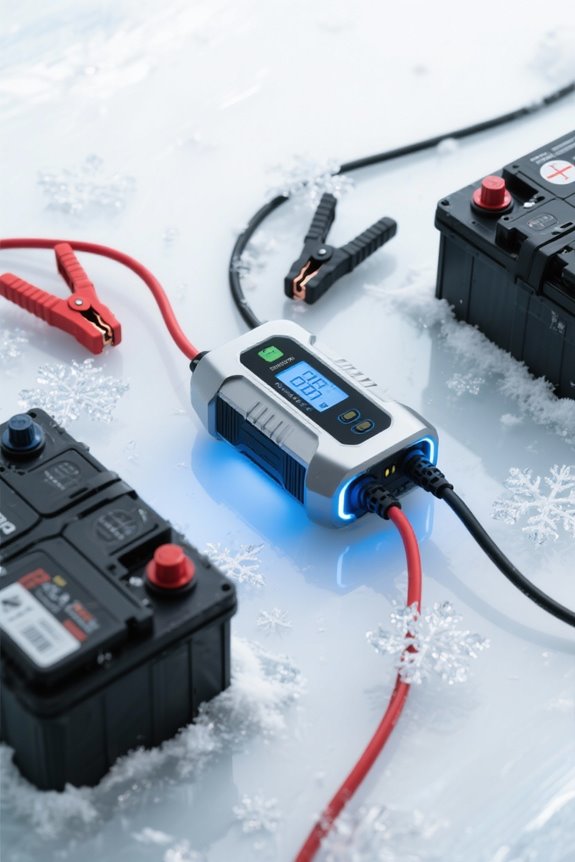


No, a jump starter can’t replace a car battery. Think of it as a quick boost in emergencies, not a long-term fix. It gives your vehicle’s engine a jolt to get going, but it doesn’t fix battery issues or provide ongoing power. We should always check the health of our car battery afterward. If you want to learn about the best uses for jump starters, keep reading!
Key Takeaways
- Jump starters provide a temporary boost to start an engine but cannot replace a car battery for long-term power needs.
- They are designed as emergency tools and do not fix underlying battery performance issues.
- A jump starter cannot recharge a completely dead car battery; it only provides a quick surge of power.
- Battery health is essential; a good jump starter relies on a functional car battery for optimal effectiveness.
- Regular maintenance and checks are necessary for both jump starters and car batteries to ensure reliability.
Understanding Jump Starters
Jump starters are handy little devices we can all appreciate, especially when our car won’t start. They deliver a quick burst of high-amperage power, enabling our engine to turn over without needing another vehicle. This jump starter technology is excellent for emergencies, offering the jump starter convenience of portability without any extra cords or outlets.
Most models today use Lithium-ion batteries, which are lightweight and rechargeable. They often include handy features, like USB charging ports, so we can power our phones too! However, keep in mind, jump starters won’t recharge a dead battery—we’ll still need to check our battery’s health later. Using them correctly can save us from getting stranded—definitely a win! Additionally, many jump starters come with safety features that ensure user protection during operation.
The Role of a Car Battery

A car battery might seem like just a chunk of metal and plastic, but it’s an essential part of our vehicle’s operation. It’s responsible for critical car battery functions, providing the power we need to start the engine and run accessories like lights and radios. Different car battery types exist, but most are lead-acid batteries that store energy through chemical reactions.
When we turn the key, the battery supplies a surge of current to the starter motor. This high cranking force gets the engine running. Plus, while the engine’s on, the alternator recharges the battery, keeping everything in sync. So, caring for our battery is important for a smooth ride and reliable performance. Additionally, understanding cold cranking amps (CCA) is crucial for ensuring your battery performs well in cold weather conditions.
How Jump Starters Work
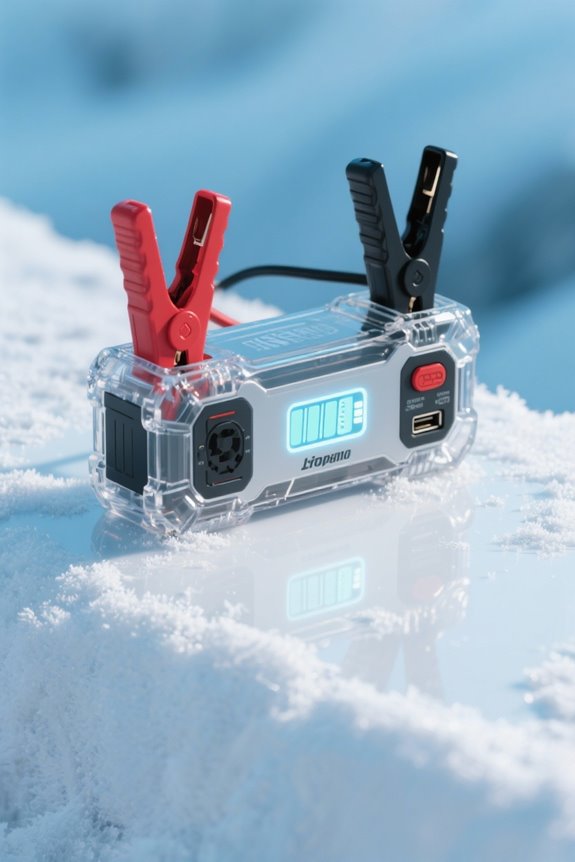
When you’re faced with a dead battery, understanding how a jump starter works can be a game changer. These handy devices use advanced jump starter technology to deliver a burst of electrical current to your vehicle’s starter motor. This kick helps your engine turn over without needing a full battery replacement.
To use one, we connect the red clamp to the positive terminal and the black clamp to a grounded metal surface or the negative terminal. Many jump starters come with safety features that prevent reverse connections or overheating, so we can feel secure using them. Plus, their compact design allows us to take them anywhere, and they can even charge our smartphones! Additionally, some models offer multiple jump-starts per charge, enhancing their practicality during emergencies.
Key Functions of Jump Starters vs. Car Batteries
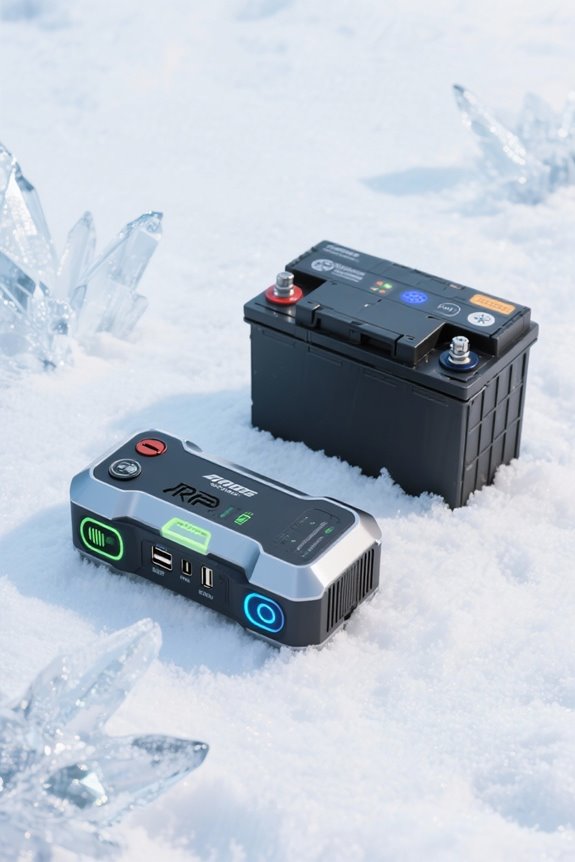
Understanding the key functions of jump starters and car batteries can help us make better decisions when our vehicle doesn’t start. Jump starters provide a quick burst of power to get our engine going, while car batteries supply the steady energy needed for everything else, like the ignition and lights.
Think of it this way: jump starter functionality is like an espresso shot for our car—great for a quick boost. In contrast, car battery capacity is what keeps our vehicle running smoothly over time. Additionally, battery performance is crucial as it impacts how long the jump starter can effectively operate before needing a recharge.
But remember, jump starters are meant for emergencies, not replacements. They can help us temporarily, but we still need that reliable car battery for daily use. Keeping both in our vehicle might just be the best plan!
Ideal Use Cases for Jump Starters

Jump starters are lifesavers when our vehicle battery decides to take a nap. They shine in emergency situations, especially when we find ourselves stuck on the roadside. Imagine a cold morning, your car refusal to start—it’s where a jump starter comes in handy, giving our engine that much-needed boost without relying on anyone else.
These tools aren’t just for starting engines. They can power up small devices, like air compressors or phones, in a pinch. Plus, they’re compact and portable, making them easy to stash in our trunk. So, whether you’re heading out on a road trip or gearing up for an outdoor adventure, having a jump starter on hand feels like a safe bet for unexpected moments. Additionally, many jump starters come with additional functionalities like built-in power banks and LED flashlights, enhancing their utility during roadside emergencies.
Limitations of Jump Starters
While jump starters are great for getting us back on the road in a pinch, they’ve got their limitations. They provide a temporary boost, which means we can’t rely on them to fix ongoing battery performance issues. If we use a jump starter without addressing the battery’s health, we risk more stranding on the road.
Also, they might not start larger engines and can lose power in extreme weather. And let’s be honest, regular maintenance is key; neglecting this can lead to dead jump starters when we need them most. So, while they’re useful, let’s remember they can’t replace a healthy battery or provide a long-term solution. Additionally, using a jump starter with higher amp output models can help with low-voltage batteries and frequent jump-start requirements. So, always assess your battery’s condition before assuming a jump starter will do the trick!
Battery Chargers and Their Importance
Before we find ourselves stranded with a dead battery, it’s good to understand how battery chargers can help us maintain a healthy vehicle battery. Battery charger maintenance is essential, as regular use prevents unexpected battery issues.
Smart charger benefits are vast! These chargers adjust the charging rate automatically, which means we won’t have to worry about overcharging. They optimize battery health and can be used for different battery types. For instance, many smart chargers feature 7-stage charging systems that enhance battery longevity and prevent overcharging.
Whether we need a trickle charger for seasonal vehicles or a portable charger for quick fixes, there’s a charger for everyone. By knowing our options and using them wisely, we can extend battery life, save money on replacements, and keep our vehicles ready for the road.
Battery Health and Maintenance
Taking care of our vehicle’s battery goes hand in hand with using battery chargers effectively. First, let’s talk about battery inspection. We should regularly check our battery terminals for corrosion and clean them with a baking soda and water mix, then dry them thoroughly. Tightening all cable connections can prevent energy loss.
It’s important to follow maintenance protocols, like checking for physical damage to the battery case. We also need to balance our use of electronics to avoid drains when the vehicle’s off. And let’s remember that monitoring our driving habits helps maintain charge, so avoiding short trips is essential. With these tips, we can keep our batteries going strong! Additionally, using a battery maintainer can help extend the lifespan of your battery by keeping it at an optimal charge level.
Safety Considerations When Using Jump Starters
When we jump-start a car, it’s crucial to keep safety in mind to avoid accidents and damage. Following safety protocols is critical. Always connect the positive clamp to the dead battery first, then the negative clamp to a clean metal spot on the frame—this helps minimize spark risks.
We should remember the correct connection sequence: dead battery positive, donor battery positive, donor negative, and vehicle chassis. Double-checking all connections prevents short circuits and helps with battery protection.
As user precautions, we need protective gloves and eye gear for safety. Finally, maintaining our jump starter through regular device maintenance guarantees it’s ready when we need it most. Additionally, understanding the importance of proper fit for various vehicle types can enhance overall vehicle maintenance. Let’s keep each other safe on the road!
Types of Batteries in Jump Starters
While some may think all jump starters are created equal, they actually come equipped with different types of batteries that cater to various needs.
Lead Acid jump starters use traditional battery chemistry. They’re robust and more affordable, but they’re heavier and bulkier.
Lithium-ion models offer a lightweight design and high energy density, allowing for quicker recharge times and multiple uses. With peak amps suitable for most vehicles, you can count on them.
Lastly, supercapacitor performance shines in quick bursts of power but can’t store energy for long. They’re compact and recharge faster, making them handy for emergencies. Additionally, higher peak current ratings in lithium-ion models are essential for effective operation in extreme cold conditions.
Always check for voltage compatibility to guarantee your jump starter meets your vehicle’s requirements!
Jump Starters and Battery Longevity
Since maintaining our jump starters is key to their effectiveness, understanding how to prolong battery life can save us time and headaches. Maintaining our jump starter’s lifespan is crucial; for example, regular lithium jump starters should be charged every three months to keep battery levels above 80%.
We should avoid overcharging, as this can degrade battery health. When storing our jump starter, a cool, dry place is best—think room temperature. Also, pay attention to how often we use it; infrequent use can actually help keep the battery in good shape.
Emergency Preparedness With Jump Starters
Having a jump starter in our vehicle can make a big difference during unexpected battery problems. These compact tools are like superhero sidekicks—offering instant power without needing a power outlet. Including a jump starter in our emergency kits boosts our roadside confidence, especially in remote areas or rough weather.
Many jump starters come with portable power features, like USB chargers and built-in flashlights, handy during nighttime breakdowns. They’re designed with safety in mind, too, minimizing errors we might make in stressful moments. Let’s choose a jump starter that matches our vehicle’s requirements, and remember to test it regularly. This way, we can guarantee it’s always ready when we need it most!
When to Use a Battery Charger
Using a battery charger is often the best choice when your vehicle’s battery is discharged but not completely dead. If we leave our cars unused for a while, or during chilly seasons, a charger can help maintain battery health. It’s great for routine battery maintenance, allowing us to gradually recharge without the stress of an instant start.
Charging tips? Connect your charger to an outlet and set it up. Keep in mind it might take anywhere from a few hours to a day or two for a full charge. After a jump start, hooking up a charger guarantees our battery fully recovers, preventing future starting issues. Let’s keep our batteries in top shape!
Final Thoughts on Jump Starters and Car Batteries
Jump starters can be a handy tool when we find ourselves in a pinch, but they aren’t a substitute for a reliable car battery. These devices excel in emergencies, giving us instant power to start our vehicles. However, they’re designed for short-term use, unlike car batteries, which are essential to our car’s electrical system.
With advancements in jump starter technology, we see improved battery performance, but we should remember that they can’t replace the consistent power a car battery provides. For everyday driving, a good car battery is crucial. So, let’s keep jump starters in our trunks for emergencies, but prioritize maintaining our car batteries for smooth rides every day.
Frequently Asked Questions
Can I Use a Jump Starter on Any Vehicle Type?
They say, “Don’t put all your eggs in one basket.” We can’t use any jump starter on every vehicle. We must guarantee compatibility with our vehicle type and choose the right jump starter brand for ideal performance.
How Often Should I Test My Jump Starter’s Functionality?
We should test our jump starter’s functionality every three months for peak performance. Regular jump starter maintenance helps guarantee reliability, especially after use. Let’s keep it ready to avoid surprises when we need it most!
What Accessories Come With Most Jump Starters?
Most jump starters come with charging cables, LED lights, sturdy clamps, and protective cases. Together, these accessories equip us for unexpected situations, ensuring we’re prepared and connected whenever we need a boost on the road.
Are There Jump Starters for Diesel Engines?
Yes, there are diesel jump starters available, including heavy-duty options designed for larger engines. Together, we can choose from a variety that guarantees reliability and power for our diesel vehicles when we need them most.
How Do I Safely Store a Jump Starter?
To guarantee our jump starters stay in peak condition, we should practice proper jump starter maintenance. Let’s store them in cool, dry places, protect them from damage, and recharge periodically for safe storage and performance.