


When using seat warmers, we’ve got choices, usually from low to high heat. To activate, just push the button with the seat icon; we cycle through settings until we find our perfect warmth. Starting with a moderate level is often more comfortable than jumping straight to max heat. Plus, remember, some seat warmers have a built-in shutoff feature for safety. If we stick around, we’d discover more tips on using these features effectively.
Key Takeaways
- Seat warmers typically offer adjustable heat settings ranging from low to high, catering to personal comfort preferences.
- Controls for heat settings are usually found on the center console, allowing easy access to adjust levels.
- Starting with a moderate heat setting can provide comfort without overwhelming warmth, especially in colder weather.
- Safety features include automatic shutoff and thermostats to prevent overheating and reduce burn risks.
- Energy consumption is generally low, averaging between 25-60 watts per seat, making it cost-effective to use regularly.
Understanding Heat Levels
When we think about seat warmers, it’s important to get a handle on the different heat levels available. These settings can truly enhance our user experience, making our rides not just warm but comforting. Most seat warmers offer low to high options, so we can pick the perfect warmth for our needs.
Some cars even adjust the heat automatically based on the cabin temperature. This means if it’s extra chilly outside, we get a cozy seat without even lifting a finger! Plus, safety features like automatic shutoff help prevent overheating, giving us peace of mind. Additionally, many seat heaters include adjustable heat settings, allowing us to customize our comfort level further. So, whether we’re hopping in after a long day or just enjoying a chilly drive, understanding these comfort features goes a long way.
How to Use Heat Settings

To get the most out of our seat warmers, locating the controls is our first step. Usually found on the center console between our front seats, these buttons often have seat icons to distinguish between driver and passenger settings.
Activating Heat
To activate, we simply press the button for the desired seat. Pressing it repeatedly will cycle through different heat levels, often indicated by numbers or bars.
Adjusting to Preferences
For our comfort, we should adjust the heat according to the weather or our user preferences. Instead of cranking it to max, starting with a moderate setting might be enough. Remember, the warmer our seats feel while driving, the quicker they heat up too! Always check our vehicle’s manual for specific operating tips to enhance our experience. Additionally, using a cushion with adjustable temperature settings allows for personalized comfort levels to suit individual preferences.
Benefits of Adjustable Heating

Adjustable heating in our seat warmers isn’t just a luxury; it’s a game changer for comfort. These settings let us make comfort adjustments that fit our temperature preferences perfectly, whether we want a gentle warmth or something more intense on a frigid day. We can bask in cozy comfort right from the moment we sit down, without bulky jackets getting in the way.
Sharing a ride? No worries! Everyone can choose their ideal heat level, making our journeys more enjoyable together. Plus, the targeted heat promotes better circulation, helping to ease any tension in our backs and shoulders. It’s about creating a snug environment that feels just right, turning our car into a haven of warmth and relaxation. Additionally, features like multiple heating levels ensure that each passenger can experience their desired level of warmth throughout the trip.
Safety Features of Seat Warmers
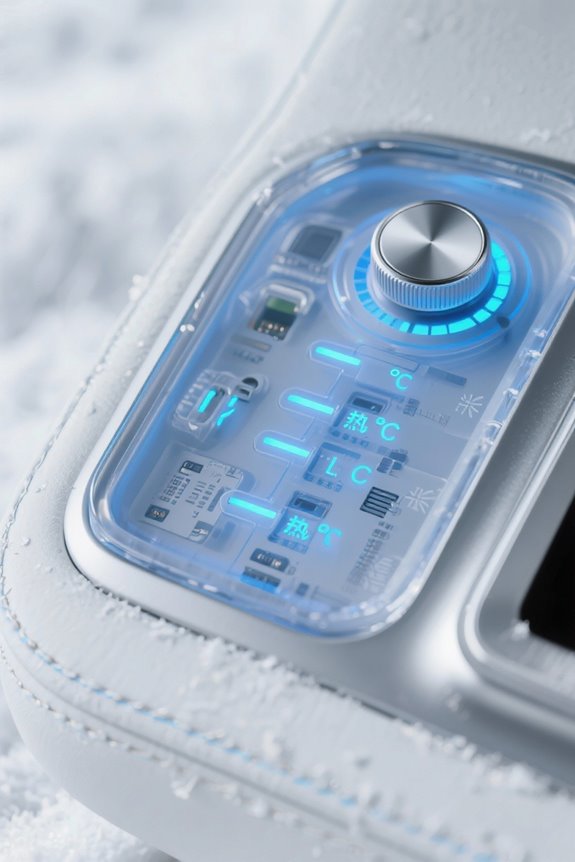
Many of us love the warmth of heated seats, but safety should always come first. When using heated seats, it’s vital to check for safety certifications like UL to guarantee they meet recognized standards. Most reputable heated seat cushions come with built-in thermostats that prevent overheating risks, automatically shutting off after 30 to 60 minutes. This feature not only boosts comfort but also minimizes the risk of burns.
Let’s be aware: some seats can exceed 150°F, which can lead to severe burns—especially for individuals with sensory deficits like neuropathy. So, always use the auto shut-off feature, and never leave heated seats on for long periods. Ignoring these safety features could turn a cozy ride into a risky situation. Additionally, energy-efficient designs help prevent electrical issues and ensure user safety during travel.
Integration With Vehicle Climate Control

While it’s great to enjoy the cozy heat from our seat warmers, integrating them with our vehicle’s climate control system can take comfort to the next level. Many vehicles now offer automatic control, adjusting seat temperatures based on what’s happening outside and inside. This is often done through the climate system’s settings, making it easy for us to enjoy that perfect warmth without lifting a finger.
For those chilly mornings, we can even set our systems for remote start, firing up the heating before we even hop in. With advanced sensors and controls in play, we can expect a consistent comfort level throughout our rides. Just imagine: a perfectly balanced atmosphere, combining heated seats and climate control working in harmony! Additionally, portable car heaters can be a great supplementary option for enhancing your vehicle’s heating capabilities during extreme cold.
Customization Options for Heat Settings
When we hop into our cars on a chilly day, we want to feel cozy right away. That’s where custom seat warmers come in handy! These seat warmers let us choose from different heat levels, usually ranging from 2 to 6 settings. We can easily pick our preferred warmth with simple switches or dials, often featuring LED lights for visibility.
Many systems even allow for user preference selection in heating zones, focusing warmth on our lower back and seat bottom. Plus, some come with handy preset settings, so we don’t have to constantly adjust them on our daily commute. This customization not only enhances comfort but also helps save energy by avoiding overheating. Additionally, having multiple temperature settings ensures a personalized experience for each user.
Maintenance of Heating Elements
Keeping our seat warmers in top shape is essential for a cozy ride. For effective heating element maintenance, we should regularly inspect wiring. Start by using a multimeter to check for breaks in the heating element; if there’s a significant deviation from the typical 4.7 to 7.0 ohms, that’s a warning sign.
When we notice hot spots or burn marks on the foam, it’s time to address potential issues. Remember to avoid placing heavy items on our seats, as this can lead to costly seat wiring repairs. If we encounter damage, soldering a wire connection can often restore function. Additionally, understanding the heating speed and efficiency of your heated seat pads can help in maintaining their performance. Ultimately, staying proactive helps us enjoy a warm and comfortable ride all season long!
Energy Efficiency of Seat Warmers
To make the most of our seat warmers without breaking the bank, it’s important to evaluate their power consumption. Most resistance-based heaters use about 25–60 watts per seat, which can add up. If we use a two-seat system for one hour, it could cost us around 3 cents, depending on our local rates. For better energy usage, we might consider advanced carbon fiber heaters, which heat more evenly and often consume less power. Additionally, high-density memory foam in heated lumbar support options can enhance comfort, further justifying the energy expense.
Frequently Asked Questions
Can Heated Seats Be Used While the Car Is Parked?
Heated seats shouldn’t be used while parked due to safety concerns. We recommend limiting usage duration to avoid malfunctions and potential overheating, ensuring we’re all protected from risks associated with heated seat operations.
What Should I Do if the Seat Heater Stops Working?
If our seat heater stops working, we should start with seat heater troubleshooting. Let’s check the switch, inspect connections for common issues, and review fuses before seeking help from a professional if needed.
Are Heated Seats Safe for Children and Pets?
Heated seats can pose risks; 38 children die yearly from heat exposure in vehicles. For child safety and pet comfort, we should prioritize temperature control, ensuring heated seats aren’t left on when vulnerable passengers are present.
Do Heated Seats Drain the Car Battery When Off?
Yes, heated seats can drain the car battery when off, especially if left on for long periods. We should always remember to turn them off to guarantee our battery stays healthy and ready for our journeys.
How Long Do Heated Seat Elements Typically Last?
Heated seat elements typically last between 3 to 10 years. To maximize their lifespan, we should keep them clean and avoid high settings. Regular maintenance can truly keep our seats cozy for as long as possible!


