


Electric seat warmers work by using electrical resistance to produce heat. When we turn them on, electricity flows through resistance wires, creating warmth through a process called Joule heating. These wires are designed to distribute heat evenly, so we avoid hot spots. Most systems use about 40 watts per seat, ensuring a cozy ride. If you’re curious about different technologies or materials used, there’s more to explore!
Key Takeaways
- Electric seat warmers generate heat through electrical resistance, utilizing wires that convert electrical energy into heat via Joule heating.
- Common materials for heating elements include nichrome wire, carbon fiber mats, and resistive metal films for effective heat distribution.
- Control systems allow users to adjust settings, including High, Medium, Low, or Off, for personalized comfort.
- Modern warmers feature safety measures like timers and automatic shutoff to prevent overheating and ensure user safety.
- Thermoelectric technology can provide both heating and cooling options, enhancing climate control within the vehicle.
Basic Principle of Electric Seat Warmers
When we settle into a car, we all appreciate a bit of warmth, especially on chilly days. Electric seat warmers use the principle of electrical resistance to keep us cozy. The current flow through resistance wires, or resistors, converts electrical energy into heat. This process, known as Joule heating, warms the seat quickly.
The wires are strategically arranged to evenly distribute heat, helping us avoid those irritating hot spots. Typically, these systems use various resistor types to guarantee efficiency and longevity. They connect directly to the vehicle’s power supply, pulling about 40 watts per seat warmer. With just a few quick minutes, we can enjoy a warm seat thanks to this clever technology! Heated seat systems can be complemented by 12V heated steering wheel covers, which enhance overall comfort during winter drives.
Heating Element Materials and Design

Electric seat warmers wouldn’t be quite as effective without the right materials and smart design choices. One popular choice for heating elements is nichrome wire. It has high resistance, which means it produces consistent heat when electrified. Another great option is carbon fiber mats. They’re lightweight, flexible, and provide even heating, making them perfect for seat applications.
For additional customization, resistive metal films can be used since they easily adapt to different shapes. Fiberglass cloth helps insulate these elements, ensuring both safety and comfort. Finally, covering the heating components with felt or fabric keeps direct heat away from your skin, which is a nice touch. Just keep these materials in mind when considering electric seat warmth! Additionally, safety features like overheating protection are crucial for ensuring safe operation during use.
Thermoelectric Heating and Cooling Technology

Thermoelectric heating and cooling technology is a fascinating field that can change the way we experience temperature control in our vehicles and homes. It employs thermoelectric devices, which use the Peltier effect to create heat and cool surfaces.
In automotive applications, these compact devices are perfect for climate-controlled seats. They efficiently manage temperature, keeping us comfortable without noisy fans or bulky systems. Imagine hopping into a car seat that warms you up on a cold day or cools you down when it’s scorching outside! Additionally, electric car blankets also utilize similar heating technology, providing instant warmth for travelers during cold weather.
Control and Operation
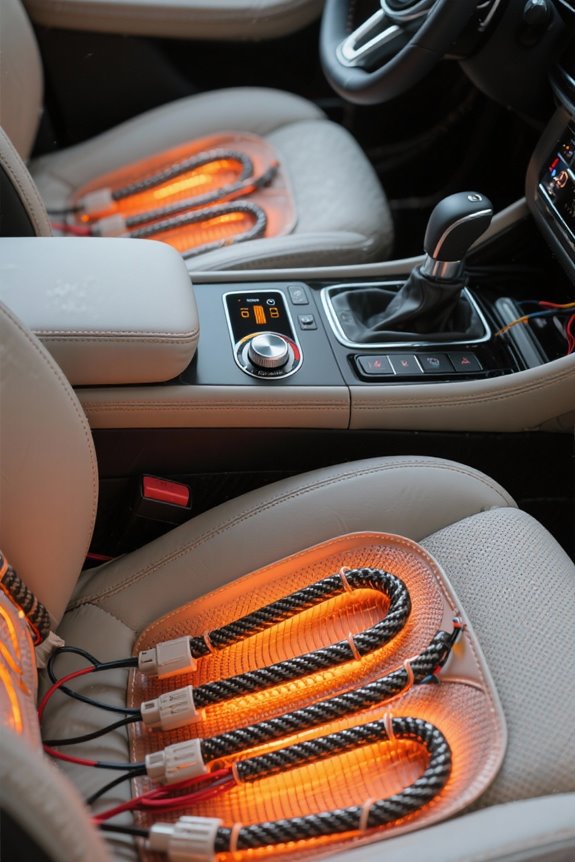
As you settle into your vehicle, understanding how seat warmers operate can make your ride more enjoyable. The control mechanisms for these heaters are typically easy to use. You’ll find buttons or touch controls on the door panels or center console that let us adjust the user settings—High, Medium, Low, or Off—with just a tap or swipe.
Some systems even kick on automatically when temperatures drop, so we don’t have to think about it! If we prefer manual mode, know that switching it to automatic will require us to reset it. Also, remember: the seat warmers usually default to Off when we start our vehicle, but they can resume based on our previous settings. Additionally, some heated seat cushions offer customizable settings to cater to individual warmth preferences.
Safety and Comfort Features
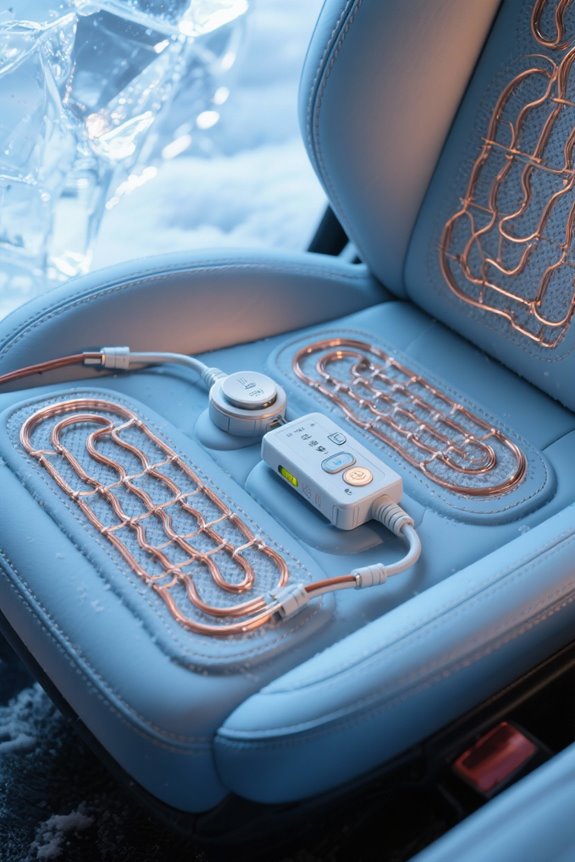
Learning how seat warmers enhance our experience also involves knowing the safety measures that keep us comfy during our rides. Most modern seat warmers come with timers and automatic shutoff features to prevent overheating, which helps guarantee a positive user experience. These systems cycle on and off, maintaining a cozy temperature without excessive heat buildup.
It’s also wise to supervise children or anyone with poor circulation when using heated seats, as they might be more vulnerable to burns. High-quality materials and professional installation reduce risks of electrical faults. By choosing adjustable warmth settings, we can personalize our comfort, especially during those chilly drives. Additionally, understanding the heating speed and efficiency of various models can help ensure optimal performance during winter months. Let’s stay cozy while staying safe!
Energy Consumption and Efficiency
Did you know that heated seats typically draw between 60 and 100 watts each? This energy draw is a bit more manageable compared to cabin heaters, which can gulp up to 8,000 watts! When we think about our usage patterns, it’s important to remember that using heated seats often can increase our overall energy consumption, similar to how having the headlights on all the time does. However, heated seats are more efficient for localized warmth, especially in colder months. For those of us in electric vehicles, we should be aware that using heated seats can slightly reduce our driving range, but it’s usually less impactful than cranking up the cabin heater. Additionally, many heated seat covers come equipped with overheat protection features to ensure user safety while enjoying the warmth. So, let’s stay cozy while being mindful of our energy use.
Frequently Asked Questions
Can Electric Seat Warmers Be Installed in Any Vehicle?
While electric seat warmers offer cozy warmth, their installation isn’t universal. We must consider aftermarket installation and vehicle compatibility, ensuring our ride can embrace this comfort without compromising safety or performance. Let’s stay warm together!
Do Electric Seat Warmers Consume Battery Power When Turned Off?
No, electric seat warmers don’t consume battery power when turned off, ensuring power efficiency. It’s great knowing we can enjoy comfort without worrying about battery consumption, as long as everything’s functioning properly!
How Long Do Electric Seat Warmers Typically Last?
Electric seat warmers typically last 5 to 10 years. Together, we can enhance their durability by following maintenance tips like avoiding spills, ensuring even weight distribution, and being mindful of heat cycles to prolong their cozy embrace.
Are Electric Seat Warmers Effective in Extremely Cold Weather?
Absolutely, electric seat warmers excel in cold weather effectiveness. They offer electric warmth comparison to full cabin heating, quickly providing cozy relief while conserving energy, making our winter drives much more enjoyable together in frigid conditions.
Can Seat Warmers Cause Damage to Car Upholstery?
Sure, those cozy seat warmers can, in some cases, lead to upholstery damage. By being mindful of heat settings and duration, we can embrace warmth without risking our beloved car’s elegance. Let’s keep our seats safe together!


