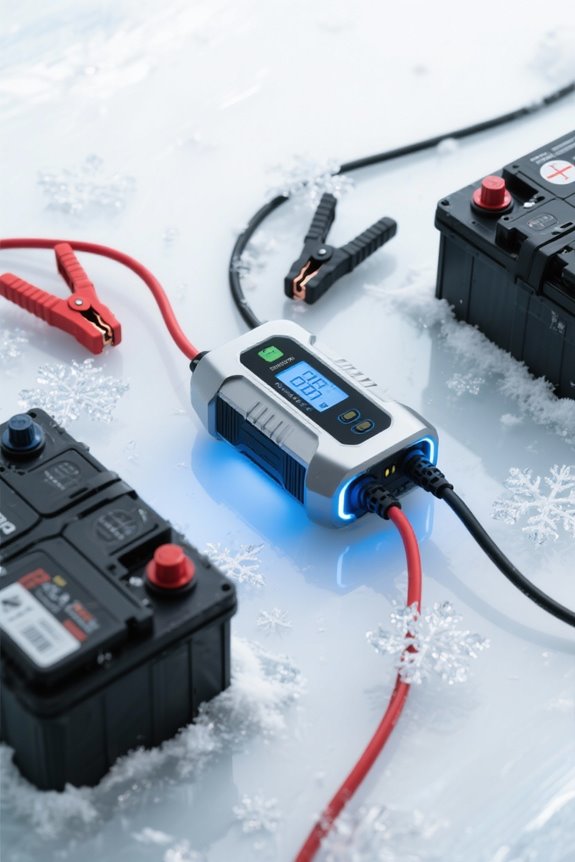


Jump starter batteries typically last between 2 to 5 years, depending on how we use and care for them. For instance, high-quality models like the JS-558 can handle over 1,000 charge cycles. To maximize lifespan, we should store them in cool places and keep them charged above 80%. If you’re noticing slow cranking or flickering lights, it might be time for a replacement. There’s more to know about maintenance and performance, so let’s keep going!
Key Takeaways
- Modern lithium jump starters typically last between 2 to 5 years, depending on quality and usage.
- High-quality models can handle over 1,000 charge cycles, while some brands may degrade within 1 to 2 years.
- Proper storage and optimal environmental conditions can significantly enhance battery longevity.
- Regular charging after use and avoiding overcharging are crucial for maintaining battery health.
- Signs for replacement include slow cranking, flickering lights, and visible damage to the battery casing.
Typical Lifespan of Jump Starter Batteries
When we think about jump starter batteries, understanding their lifespan is key. Modern lithium jump starters usually last between 2 to 5 years, depending on battery types and how we use them. For instance, high-quality models like the JS-558 can handle over 1,000 charge cycles, while some NOCO models may only last 1 to 2 years. It’s important to note that performance metrics can reflect how often we use our jump starters. If we use them regularly, we might see reduced lifespan—down to 2 to 3 years in some cases. To maximize longevity, we should store our batteries properly and avoid extreme temperatures. Regular checks can help keep our jump starters ready for action! Additionally, considering factors like power capacity can influence your choice of jump starter and its overall performance.
Factors Affecting Battery Longevity
While we may think jump starter batteries are simply plug-and-play, their longevity can be influenced by several factors we might overlook. Our charging habits play an essential role; it’s best to charge after every use. Overcharging can reduce a battery’s lifespan, so we shouldn’t leave it plugged in indefinitely.
Environmental conditions are equally important. Keeping our jump starters in moderate temperatures, ideally between 50°F and 70°F, helps maintain performance. Storing them away from extreme heat or cold is critical, too. High humidity can affect the battery’s internals, so let’s keep them dry. By being mindful of these factors, we can greatly prolong our jump starter batteries’ lives and make sure they’re ready when we need them the most! Additionally, using a jump starter with multi-protection systems ensures safe operation and can contribute to battery longevity.
Signs a Jump Starter Battery Needs Replacement

It’s important to keep an eye on our jump starter batteries because they don’t last forever. If we’ve noticed our vehicle needing more jump starts or the engine cranks slowly, it’s time to pay attention. Flickering headlights or dim dashboard lights are clear wear indicators of declining battery performance.
We should also check for visible signs, like a swollen battery case or corrosion on the terminals. If we catch unusual smells like rotten eggs, our battery might be venting and needs replacing. Finally, if we’ve tested the battery and it struggles to hold a charge, it’s a solid sign that we need to get a new one. Keeping these considerations in mind helps us stay safe on the road! Additionally, regular maintenance, such as recharging every three months, can help extend the lifespan of jump starter batteries.
Maximizing Jump Starter Battery Life

To get the most out of our jump starter batteries, we need to pay attention to a few key practices. First, let’s talk about battery care. We should store our jump starters in a cool, dry place, ideally between 50°F and 70°F. This prevents any damage from extreme temperatures.
Next, we need to take into account charging frequency. Regularly charging the battery helps maintain its health, so let’s aim to keep it above 80%. If we use it often, charging it nightly is a smart move. Just remember, we should avoid leaving it plugged in for too long, as that can shorten its life. Additionally, using a battery maintainer can help optimize the charging process and prolong battery life. By following these tips, we’ll guarantee our jump starters are always ready when we need them!
Maintenance Best Practices

Maintaining our jump starter isn’t just smart; it’s essential for keeping it in top shape. Regular visual inspections can help us spot issues like frayed cables or cracks. Let’s make a habit of checking these before each use!
After we’ve used our jump starter, we should recharge it right away. Following proper charging practices not only keeps it ready but also boosts its longevity. Remember to unplug it once it’s fully charged—this prevents overcharging, even if it’s built-in protection.
Storing it in a cool, dry place makes a big difference. By keeping it clean and well-kept, we guarantee it’s always there for us when we need a boost! Plus, no one likes a dusty jump starter. Additionally, understanding battery health monitoring is crucial to ensuring optimal performance and longevity of our jump starter.
Comparison to Jumper Cables
When it comes to jump-starting a vehicle, we often find ourselves choosing between jump starters and traditional jumper cables. Jump starter advantages are clear; they’re more convenient and safer since they don’t rely on another vehicle. Plus, they often include features like built-in lights and USB ports. On the flip side, jumper cables can be cumbersome, especially if you’re in a tight spot—what a hassle! However, jumper cables do have one perk: they can last indefinitely as long as they’re not damaged. But without the skill to connect them properly, we might face jumper cables disadvantages. So, if we’re looking for ease and practicality, a trusty jump starter might be our best bet! Additionally, many jump starters come with safety features that enhance their reliability during use.
Understanding Battery Cycle Life
Battery cycle life plays a significant role in how long our jump starter will serve us. Fundamentally, it’s the number of charge cycles a battery can handle before it starts to lose power. Most lithium-ion batteries, which we often find in jump starters, last between 300 to 500 cycles. However, if we use our jump starter wisely, we can extend its life.
Factors like battery chemistry, depth of discharge, and charging habits can improve or shorten cycle life. For example, fully discharging can hurt performance, while maintaining a charge above 80% helps longevity. With some care—avoiding overcharging and understanding usage patterns—we can enhance our battery’s durability, ensuring reliable support when we need it most. Additionally, selecting a model with peak outputs between 1000A and over 8000A can also influence battery performance and longevity.
Impact of Temperature on Battery Lifespan
Did you know that temperature plays a huge role in how long our jump starter batteries last? We’ve all felt the sting of extreme temperatures, but our batteries do, too! High temperatures can cut battery life in half for every 15°F increase above 77°F. Meanwhile, cold weather reduces battery capacity by 50% at −22°F.
To make our batteries last, we should store them in moderate temperatures, ideally between 50°F to 70°F. Also, we can help our battery chemistry by avoiding direct sunlight and giving it a rest after use. Remember, disconnecting our jump starter right away and keeping it charged above 80% will keep it happy and healthy in those pesky temperature fluctuations! Additionally, using a charger with automatic maintenance charging can help maintain battery voltage without depleting the battery over time.
Common Misconceptions About Jump Starter Batteries
Although many of us think jump starter batteries can last forever, that’s simply not the case. In reality, battery types like lithium typically last 2–5 years, with 300–1,000 full charge cycles. Some folks expect their jump starters to last indefinitely, but all batteries degrade with time—even those that sit unused.
It’s essential to periodically recharge every 3–6 months to prevent deep discharge, which shortens lifespan. We should also remember that a 20% drop in capacity after several cycles is normal, not a defect. Additionally, not all jump starters work the same; premium models often outperform budget options, meeting different user expectations. Knowing these truths can help us make better choices. Furthermore, understanding jump-start capacity and power specifications can assist in selecting the right model for your needs.
Frequently Asked Questions
Can I Use a Jump Starter to Charge Other Devices?
Absolutely, we can use a jump starter as a power bank to charge our devices. It’s like having a trusty companion that keeps our smartphones and laptops powered up, ensuring we’re always connected and ready for adventure!
What Should I Look for in a Quality Jump Starter?
When choosing a quality jump starter, we should prioritize battery maintenance and robust safety features. This guarantees longevity and reliability, making us all feel secure during emergencies and enhancing our overall experience with the device.
Does Jump Starter Size Affect Its Performance?
Does size really impact jump starter performance? Absolutely! When we compare sizes, larger models offer more power and reliability, ensuring we’re ready for emergencies, while smaller ones may struggle. Choosing wisely matters for our peace of mind!
Are There Specific Brands Known for Longevity?
Yes, brands like NOCO and Hulkman boast impressive durability ratings. We’ve compared these options, and we find that their construction quality and performance make them ideal choices for long-lasting jump starters. Let’s choose wisely together!
Can I Repair a Jump Starter Battery Myself?
Yes, we can attempt a DIY repair on our jump starter batteries! Did you know regular battery maintenance can extend lifespan by up to 30%? Let’s approach repairs carefully, ensuring safety and proper techniques.