


We should apply de-icer when temperatures dip below freezing. If we want to be proactive, it’s best to spray de-icer the night before to prevent ice from forming. Starting the car to warm the windshield is also helpful before spraying. For better results on really cold mornings, using a special product designed for extreme conditions can make a difference. Stick around, and we’ll cover more tips to make winter driving easier!
Key Takeaways
- Apply de-icer when temperatures drop below freezing for optimal results.
- For best effectiveness, spray de-icer the night before ice is expected.
- Use a 12V defroster fan while applying de-icer to enhance heating.
- Consider specialty products for severe cold, as conventional de-icers lose effectiveness below -10°C.
- Pre-application creates a protective barrier, reducing future scraping and maintaining visibility.
Morning Application Strategies
When we think about applying de-icer in the morning, timing is everything. We need to apply it once the temperature drops below freezing for the best results. A great warming technique is starting our car to warm up the windshield before spraying. This can help the de-icer work faster. Additionally, using a 12V defroster fan can enhance the heating functionality and speed up the defrosting process.
The Benefits of Pre-Application
Applying de-icer before ice forms can make our mornings run smoother. With a few simple pre-application techniques, we can enjoy quick ice dissolving and save time. By creating a barrier, we reduce the effort needed to scrape off ice later, letting us start our day without the hassle.
Moreover, pre-application helps protect our vehicle surfaces. It minimizes the risk of scratches and preserves visibility, keeping our windshields clear. We’ll drive safer too, as fully de-iced windows prevent unexpected hazards. Plus, we can save money over time by using less de-icer and prolonging our scraping tools. Additionally, choosing eco-friendly de-icers supports a sustainable approach to winter vehicle care.
In brief, a little effort now makes for a big payoff later! So let’s keep our cars ready and our mornings stress-free!
Navigating Extreme Weather Conditions
As we keep our de-icing routine in check, we need to think about how extreme weather can throw a wrench in our plans. When temperatures dip below -10°C, conventional de-icers lose effectiveness. That’s when specialty products, like Prestone, come to the rescue.
Timing is everything. Applying de-icer the night before helps prevent ice from sticking firmly to our windshields. Plus, we can start our cars, crank up the heater and defroster, and even clear snow near air intakes for better moisture management. Products with high-performance ice-melting formula can significantly improve results in severe conditions.
Let’s remember, parking in sunlight can help naturally clear the ice. With these tips, we can tackle those chilly mornings together, ensuring our rides are ready when we need them!
Different Types of De-Icer Products
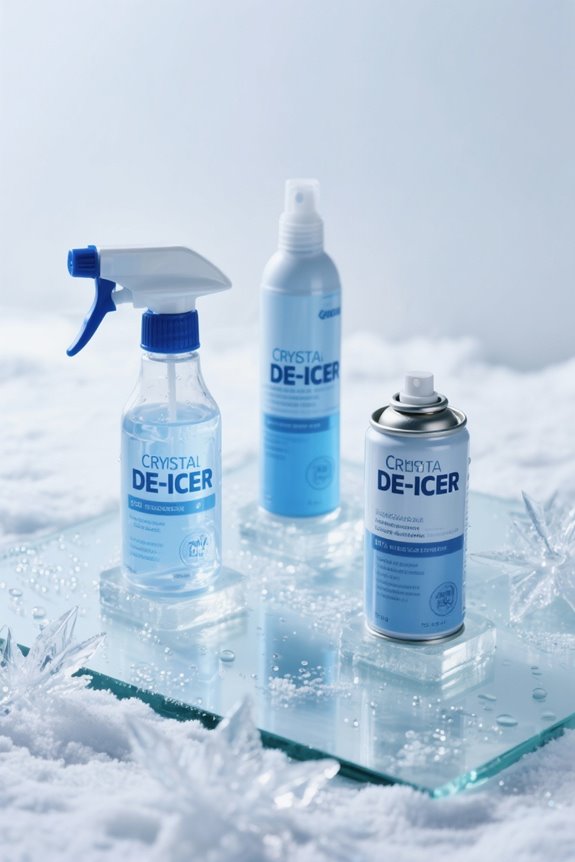
De-icer products are essential allies during the frigid winter months. We’ve got several options, each with unique chemical formulations and application methods. For instance, many products use alcohol compounds like isopropanol that lower water’s freezing point. There are also ammonia-free formulas, which are safer for our cars.
When it comes to application, aerosol sprays allow for quick and even distribution. Trigger spray bottles offer flexibility for targeted use on windows or locks. For stubborn ice, ice scraper brush combos can save the day. Additionally, choosing a product that is labeled as safe for car finishes can help prevent damage to your vehicle while ensuring effective ice removal. Portable heaters plug into our cars, softening ice from the inside out. With so many options, we can find the perfect de-icer to keep our vehicles winter-ready!
Understanding Effectiveness and Limitations
How well do we really understand how effective de-icers are and their limitations? The chemistry behind de-icers varies; for instance, calcium chloride is powerful at melting ice in extreme cold, but sodium chloride is better at milder temps. However, we should consider the environmental impact of using these products. For example, salt can hurt our vehicles and contribute to rust.
Additionally, applying de-icers before ice forms makes a significant difference. Remember, no de-icer works magic at super low temperatures, and some can cause damage to our ecosystems. Therefore, selecting eco-friendly de-icers helps mitigate negative environmental effects while keeping our cars safe from ice!
Safety Considerations for De-Icer Use
When we’re tackling icy windshields, it’s critical to think about safety first. Many de-icer products contain chemicals that can pose health risks, like respiratory irritation, so we should always use them in well-ventilated areas. Don’t forget protective gloves and eye gear, just in case the chemicals come into contact with our skin or eyes.
Let’s also keep in mind that some aerosol de-icers are fire hazards. We must store them away from heat and open flames, and never spray them near ignition sources. Following these safety tips not only protects us but also guarantees a smoother winter routine. It’s also wise to consider using pet-safe de-icers that minimize irritation for our furry friends. So, let’s be smart, safe, and avoid those icy headaches!
Best Practices for De-Icer Application
Before we start tackling that ice, it helps to prepare properly. First, let’s assess the ice thickness. If it’s too thick for our trusty scraper, a good de-icing spray can make a world of difference. Using effective de-icer techniques, it’s best to apply a thin layer, focusing on key areas like the windshield.
Next, let’s warm up our vehicle a bit; this makes scraping easier. Remember to let the de-icer sit for a minute or two before we scrape. While scraping, keeping up with regular scraper maintenance, like cleaning the blade, helps maintain its effectiveness. If the ice sticks around, don’t hesitate to reapply! Additionally, ensuring that the de-icer is effective against thick ice will help achieve better results.
The Impact on Vehicle Maintenance
Many of us might not realize just how much de-icers can affect our vehicles. While they make our roads safer in winter, they also bring corrosion risks. Chemicals like calcium and magnesium chloride can speed up rust formation on critical parts like brake lines and fuel tanks, leading to high maintenance costs. To keep our cars in top shape, it’s essential to wash them regularly, especially the undercarriage. This simple act can help prevent costly damages. Remember, if we don’t address rust early on, we might find ourselves facing bigger repair bills down the line. So, let’s stay proactive—repair paint chips and wash our vehicles after storms to help them last longer! Additionally, choosing non-toxic de-icers can significantly reduce the risk of corrosion and protect your vehicle’s longevity.
Frequently Asked Questions
Can De-Icer Be Used on Headlights or Taillights?
Yes, we can safely use de-icer on headlights and taillights for effective headlight clearing and taillight safety. It improves visibility, ensuring we all drive with confidence, even in frosty conditions. Let’s stay safe together!
How Long Does De-Icer Typically Take to Work?
When we apply de-icer, it usually starts working in under a minute. Temperature influences its effectiveness, so choosing the right product can make a significant difference compared to lower-quality options. Let’s melt that ice away together!
Are There Any Eco-Friendly De-Icer Options Available?
Yes, there are great eco-friendly solutions available! We can choose natural alternatives like sugar beet juice or magnesium chloride, which are safe for us, our pets, and the environment while effectively melting ice.
Does De-Icer Expire or Have a Shelf Life?
Yes, de-icers have a shelf life influenced by their ingredients and storage. Properly storing them in original packaging guarantees effectiveness. Let’s always check for signs of deterioration before we use any older products.
Can I Make De-Icer Using Common Household Products?
Yes, we can make de-icer using common household products! With homemade recipes, let’s remember safety precautions, primarily avoiding toxic ingredients. Together, we can create effective solutions, keeping our cars clear without damaging their paint.


